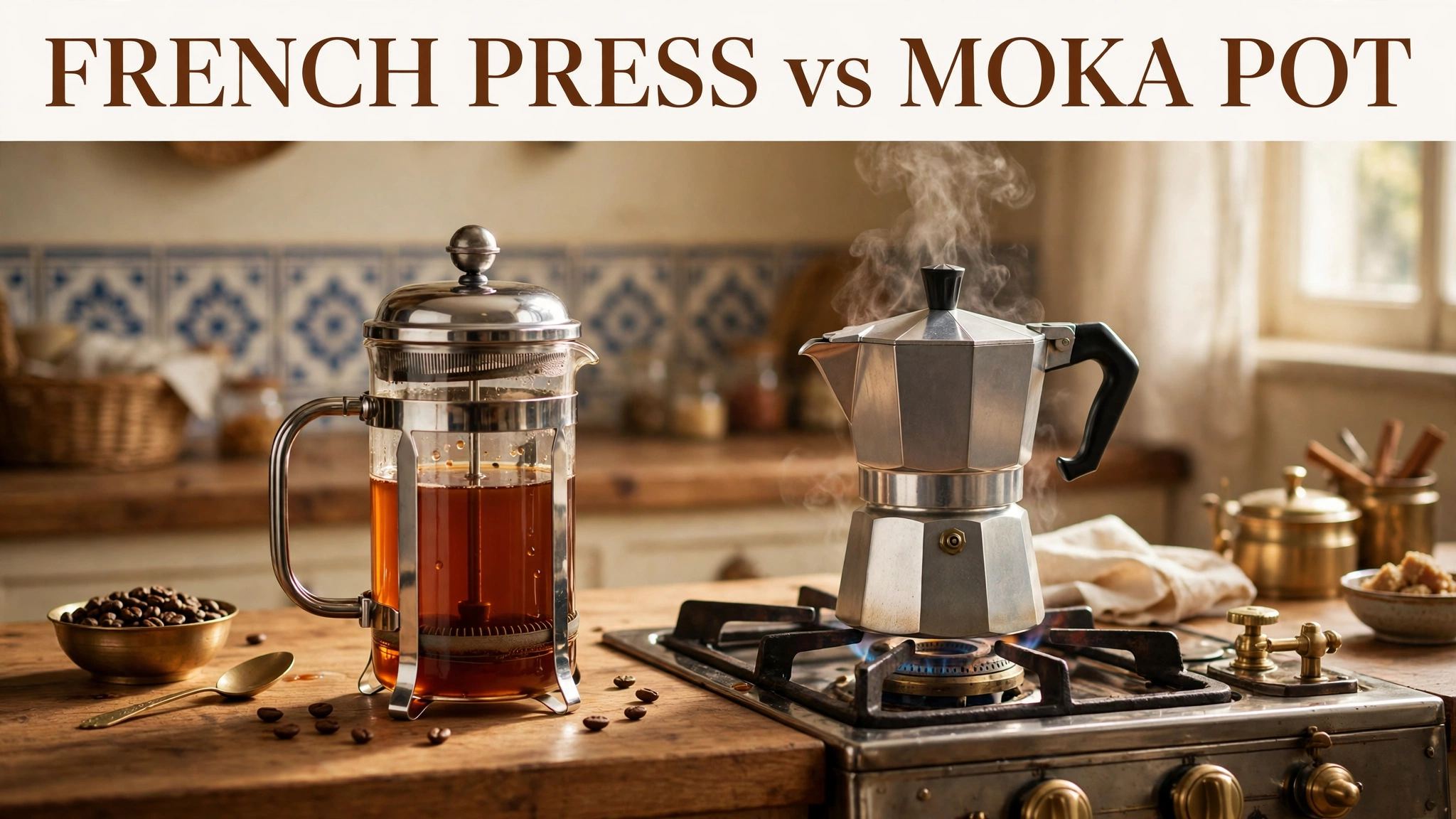
The French press vs moka pot India debate has a one-line answer: if you drink your coffee with milk, buy the moka pot; if you drink it black, by the mug, buy the French press. That single rule settles it for most Indian kitchens — and the rest of this guide proves it with live prices checked today, real caffeine numbers, and the full first-year cost of each brewer. Both start under ₹1,000, both need the same ₹1,163 grinder, and both make far better coffee than instant. What differs is the cup they make and who they suit.
Last updated: 6 November 2026. Prices checked today on official brand stores and Flipkart; Amazon.in pages could not be read today (site-wide 503 errors), so no Amazon.in price is quoted as today’s price. Prices change frequently — the price at checkout is what counts.
French Press vs Moka Pot India at a Glance
| French Press | Moka Pot | |
|---|---|---|
| How it brews | Immersion: coarse grounds steep, then a mesh plunger holds them back | Steam pressure (~1–2 bar) pushes hot water up through fine grounds |
| Grind | Coarse, like rock salt | Fine, like table salt |
| Brew time | ~4 minutes steeping | ~5–7 minutes on the stove |
| What you get | A full mug (250–350 ml), smooth and full-bodied | Small strong cups (300 ml pot makes ~6 cups of ~50 ml) |
| Taste | Smooth, round, oily, heavier body; some sediment | Bold, intense, espresso-style; cleaner finish |
| Caffeine per ounce | ~10–15 mg | ~50–65 mg |
| Caffeine per serving | ~80–120 mg per 240 ml mug | ~100–130 mg per 60 ml serving |
| Best for | Black coffee, brewing for 2+ people | Milk coffee, Americanos, solo strong cups |
| Stove needed? | No — just hot water | Yes — gas stove (aluminium pots fail on induction) |
| Starting price today | ₹678 (AGARO Delite 600 ml) | ₹806 (AGARO Classic 6-cup) |
How Each One Actually Brews
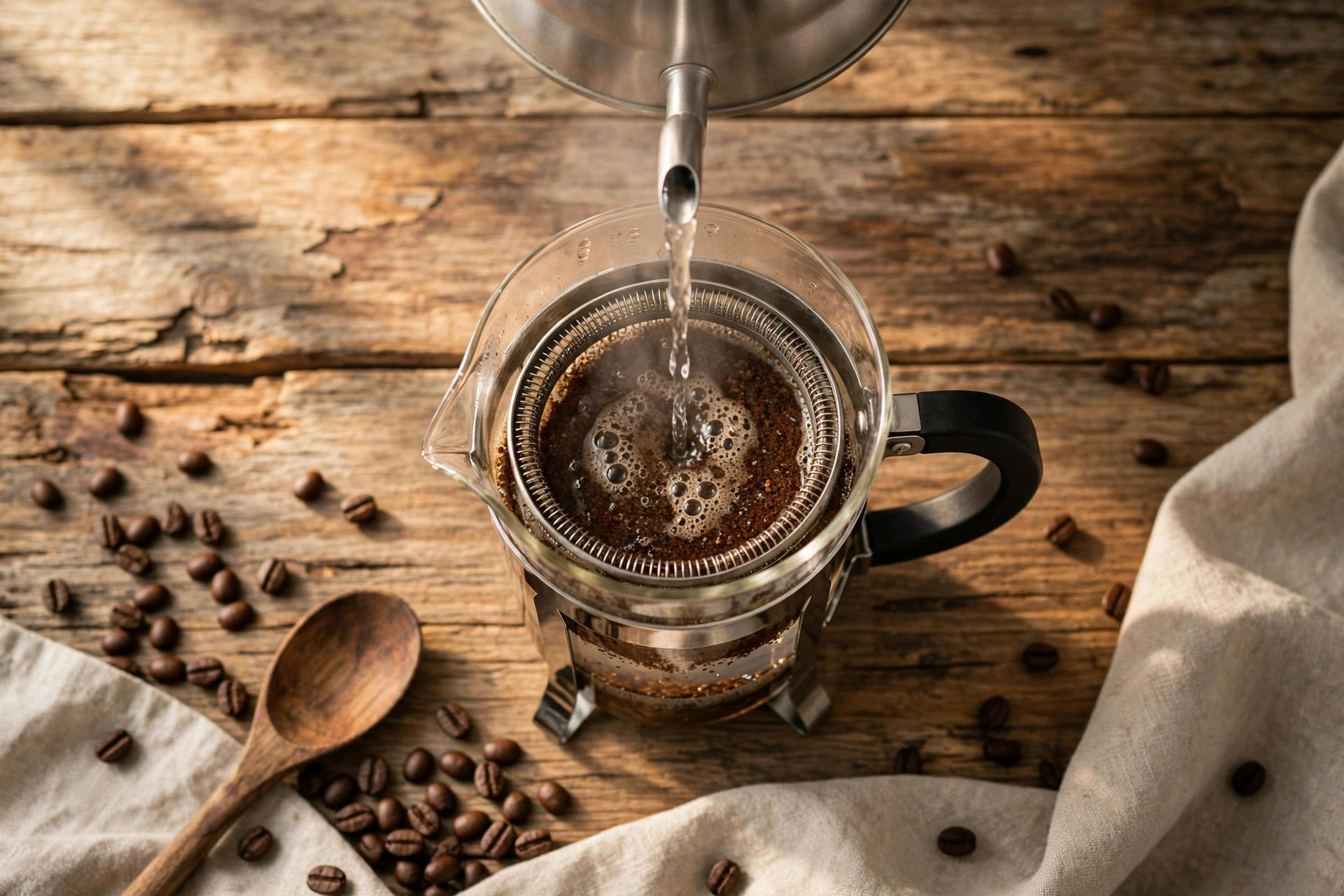
The difference between these two brewers is physics, and it decides everything else. A French press is an immersion brewer: coarse coffee goes in a glass beaker, hot water goes in, you wait about four minutes, and a metal mesh plunger holds the grounds back. The coffee sits in the water the whole time, so extraction is slow, even and forgiving — small mistakes in grind or timing barely matter, which is why the French press is the easiest manual brewer to learn.
A moka pot works the other way. Water goes in the bottom chamber, fine coffee sits in a basket above it, and the pot goes on the stove. As the water heats, steam pressure pushes it up through the coffee into the top chamber. The brew takes five to seven minutes on medium-low heat; take the pot off the moment it starts gurgling and the stream turns pale — that gurgling means the water is running out and the coffee is about to turn bitter.
Three numbers matter. Water should be around 93°C — just off the boil. The French press ratio is about 1:15 to 1:16, roughly 15 g of coffee for a 250 ml mug. The moka pot needs no measuring: fill the basket level with fine grounds, do not tamp, and fill the water to just below the safety valve. And one honest correction: a moka pot is not an espresso machine. At about 1–2 bar it makes espresso-style coffee, while real espresso needs 9 bar — no crema, no true espresso shot, only a strong cup that stands up to milk.
Taste in the Cup
Drink them side by side and the difference is obvious. French press coffee is smooth, round and heavy on the tongue. Because nothing paper-filters the oils out, the cup keeps its natural oils and a thicker mouthfeel, and the flavour notes of the bean — chocolate, nut, fruit — come through clearly. The trade-off is a slightly silty last sip: fine particles slip past the mesh.
Moka pot coffee is the opposite shape: bold, intense and punchy, with a clean, dry finish. The pressure extraction pulls out deeper, more bitter compounds, so the cup tastes closer to espresso than to drip coffee, with roasted, smoky, sometimes caramel notes. It rewards medium and dark roasts; light roasts come out sour and thin — so light-roast single origins show off better in the French press, while the dark blends most Indian roasters sell feel more familiar from the moka pot. And because it is concentrated, moka coffee drunk straight can feel too intense — many people dilute it with hot water, an Americano with extra steps.
Caffeine: Per Sip vs Per Mug
This is where most comparisons mislead, because “stronger” can mean two different things. The best data comes from a Swiss lab study that brewed nine methods side by side, including a Bialetti moka pot and a Bodum French press. It ranked caffeine per millilitre from espresso at the top (about 21 mg per 10 ml) down through the moka pot, then the French press, with filter coffee lowest at about 4.7 mg per 10 ml.
Translated into servings, the picture flips. A typical 60 ml moka serving carries roughly 100–130 mg of caffeine, while a full 240 ml French press mug carries roughly 80–120 mg. Per ounce, the moka pot is about four to five times stronger; per serving, the two are surprisingly close, because a French press serving is several times bigger. So when someone says the moka pot is “way stronger”, they mean the taste and the concentration — while a full French press mug is a full dose too.
For scale, the US FDA puts a 12 oz brewed coffee at 113–247 mg of caffeine and 400 mg a day as the level healthy adults generally stay under — so one 300 ml moka pot (about 600–780 mg in total) is for sharing, not for one person.
Which Is Better for Your Kind of Coffee?
Milk coffee — lattes, cappuccinos, milky kaapi-style coffee — buy the moka pot. Its concentrated brew holds up against hot milk; a French press mug diluted with milk tastes thin.
Black coffee — buy the French press. A full, satisfying mug with more flavour range, better for light and medium roasts. Moka coffee drunk black is harsh for most people.
Brewing for two or more — buy the French press. A 600 ml press makes two big mugs in one go; a 300 ml moka pot serves six small cups, and each person wants two or three.
Travel or camping — the moka pot wins. All-metal, nearly indestructible, packs small. A glass French press is the worst travel brewer: one knock and it is shards (stainless steel is the exception).
Induction hob — the French press wins by default. Aluminium moka pots (Bialetti classic, AGARO Classic, InstaCuppa Classic — almost every budget moka pot) do not work on induction at all. Your options are stainless steel, an adapter plate, or the electric moka pot. A French press needs no stove, just a kettle.
Cleaning up — a tie. Both rinse clean in under a minute with no paper filters. The press has one annoying step (scooping wet grounds out); the moka pot just needs its three parts rinsed.
French Press vs Moka Pot India: Which Models to Buy Today
Every price below was verified on 6 November 2026. Where a product could not be bought today, that is stated plainly — a “Notify Me” button is not a price you can pay.
French press picks
AGARO Delite French Press 600 ml — Best budget pick

The AGARO Delite French Press 600 ml.
One of two near-identical AGARO twins — 600 ml of borosilicate glass at the joint-lowest price in this guide.
The essentials
- 600 ml borosilicate glass beaker in a stainless frame — two mugs per brew
- Plunger with mesh filter — no paper, no pods
- About 4 minutes steeping
- Zero running cost
- Rated 4.4★ from 375 ratings on Flipkart
What stands out
- Full-bodied, oil-rich mug — richer than drip coffee
- Nothing to wear out except a mesh you can replace
- Also cold-brews: steep coarse grounds in cold water for 12–24 hours and press as usual
Keep in mind
- Borosilicate glass — tougher in its steel frame, but still glass; treat it like glass
- A little sediment at the bottom of the cup is the press trade-off
₹699
AGARO Elite French Press 600 ml — Best budget pick, the Delite’s twin
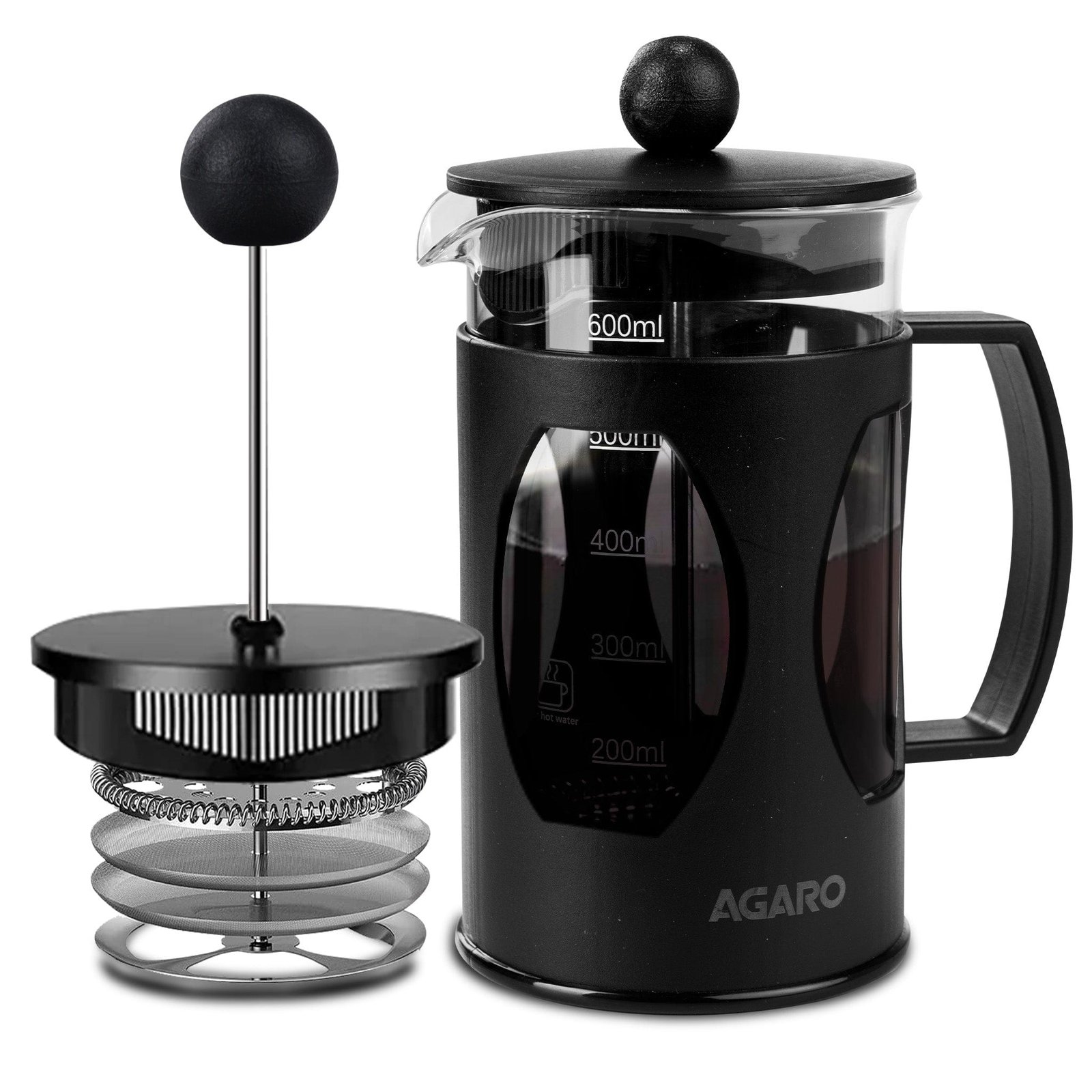
The AGARO Elite French Press 600 ml.
The Delite’s near-identical twin — same 600 ml glass body, same price everywhere; buy whichever is in stock.
The essentials
- 600 ml borosilicate glass carafe with sleeves and measurement markings
- 18/8 stainless steel plunger
- Four-level steel filtration
- About 480 ml in the cup — two mugs
- In the box: 2 spare mesh filters, a scoop and a cleaning brush
What stands out
- Four-level filtration holds back more grounds than a single mesh
- Measurement markings keep the 1:15 coffee-to-water ratio honest
- Two spare mesh filters, a scoop and a brush in the box
Keep in mind
- A little silt at the bottom of the cup is the style, not a fault
- No home trial — for trial and longer buyer protection, the InstaCuppa Classic costs more
₹819
Our full comparison of seven presses is in our Best French Press Coffee Maker in India guide.
Wonderchef French Press 350 ml Personal — Cheapest of all, with a catch

The Wonderchef French Press 350 ml Personal.
The cheapest press in this guide — with a catch: on check day it was not buyable at all, only a Notify Me button.
The essentials
- 350 ml — about 280 ml in the cup, one large mug
- Borosilicate glass carafe with measurement markings
- Steel mesh, four-level filtration
- 1-year warranty
- Rated 4.1★ from 794 ratings on Flipkart
What stands out
- The lowest price in this guide
- Honestly portioned for one — no half-pot going cold and bitter on the counter
- Four-level filter keeps the cup clean for a press
Keep in mind
- Not buyable on check day — Flipkart showed Notify Me only, and the brand store was sold out too
- Stock is intermittent — do not pay a reseller a premium for it
- One mug only — brew for two and you need a 600 ml press
₹498
The brand store’s 350 ml at ₹469 is also out of stock, and the 600 ml at ₹549 is sold out too.
InstaCuppa French Press 600 ml Aero Edition — Best mid-range pick
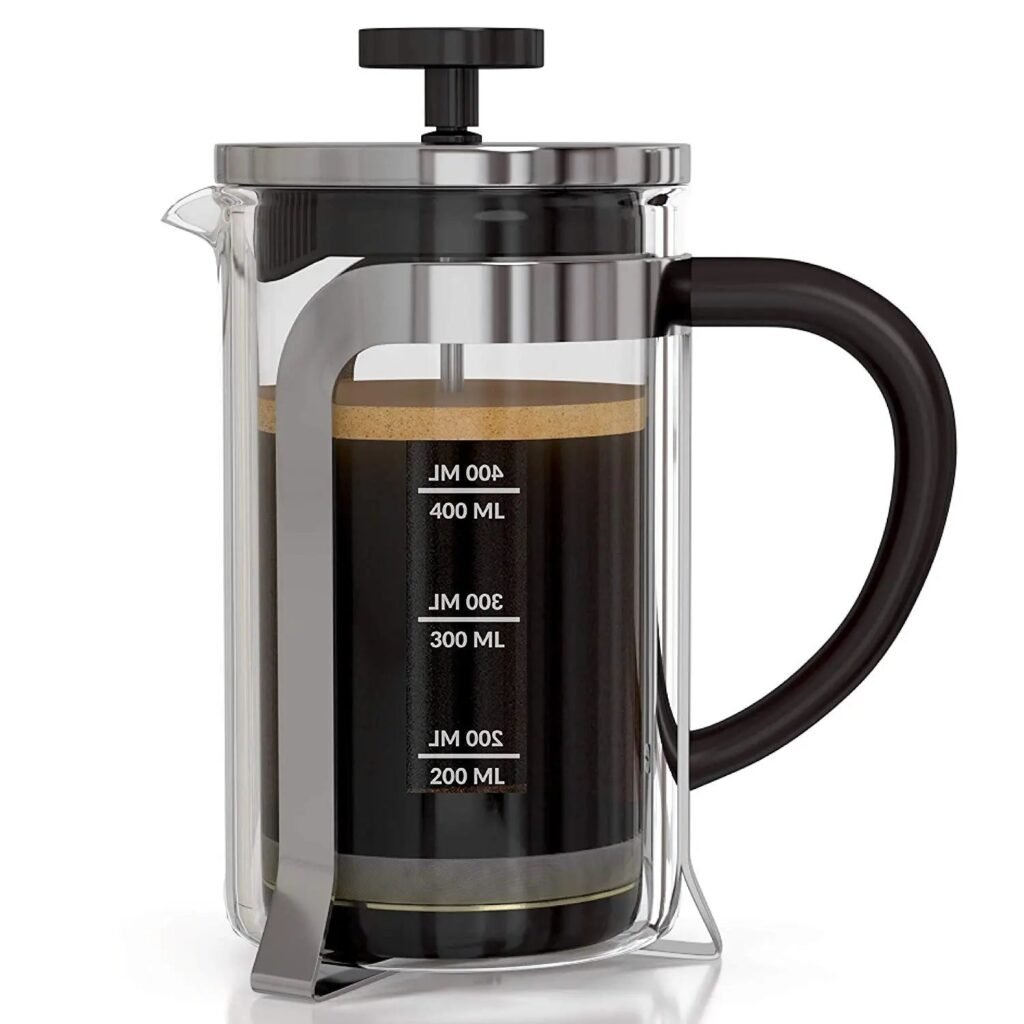
The InstaCuppa French Press 600 ml Aero Edition.
The best-rated 600 ml press here, with 4-part filtration that keeps more sediment out of the cup.
The essentials
- 600 ml heat-resistant glass carafe with 100–500 ml markings
- Stainless-steel tripod frame
- 4-part filtration — stainless mesh with a coil-spring rim
- In the box: 2 spare filters, a scoop and a brush
- 10-day home trial and 1-year warranty, bought direct
What stands out
- Best-rated 600 ml press in this guide — 4.73★ from 218 reviews
- 4-part filtration keeps more sediment out of the cup
- 10-day home trial with free pickup and a full refund, bought direct
Keep in mind
- Glass carafe — hand-wash it, and warm it before brewing; breakage from misuse is not covered
- A press never gives a zero-sediment cup — some silt is the style
₹1,599
InstaCuppa Classic Glass French Press 600 ml — Most-reviewed 600 ml press
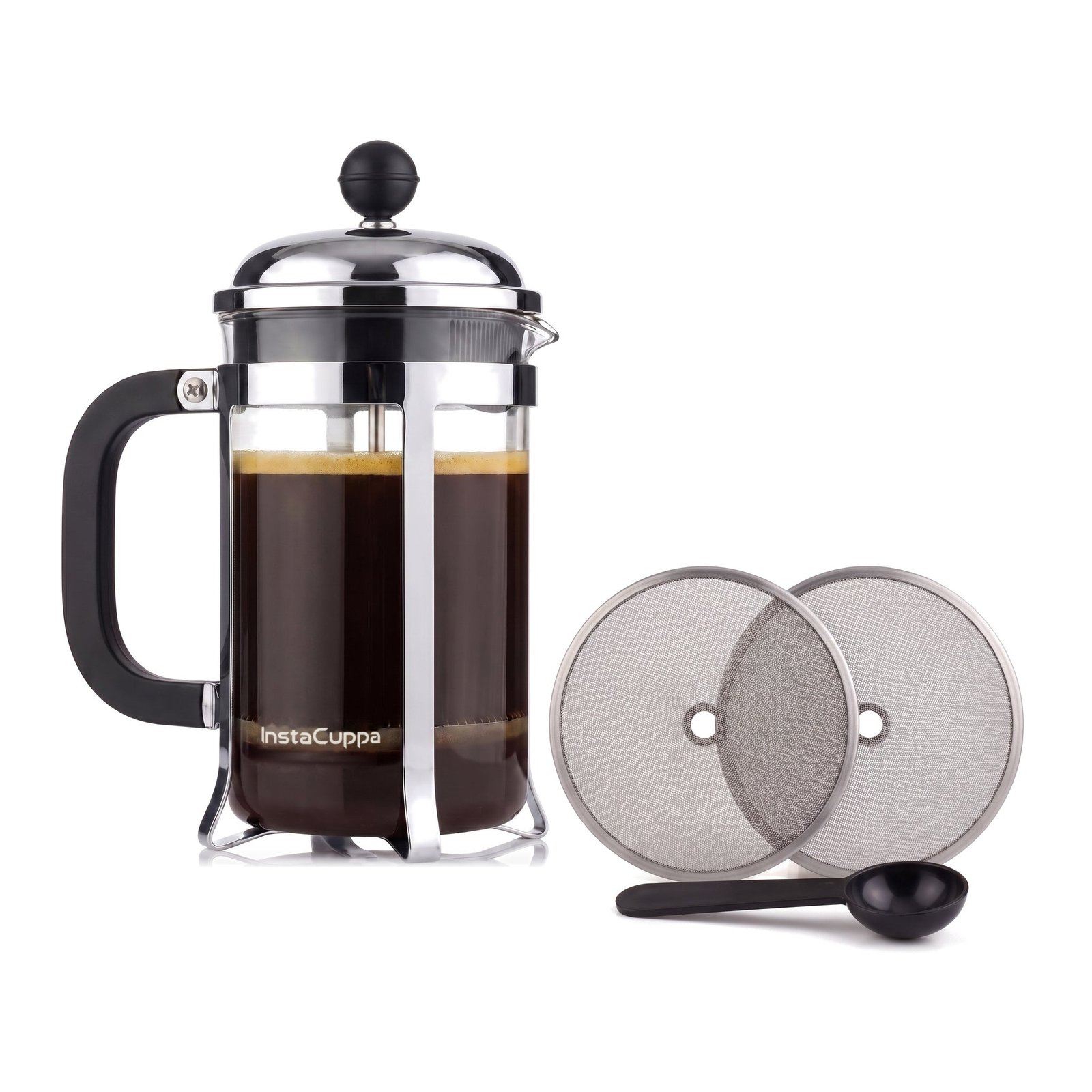
The InstaCuppa Classic Glass French Press 600 ml.
The same brewer as the Aero with a different filter assembly — and the largest rating base in this guide.
The essentials
- 600 ml borosilicate carafe with measurement markings
- Stainless mesh, four-part filtration
- Finishes: Clear, Black and Copper
- In the box: 2 spare mesh filters and a cleaning brush
- 10-day trial and 1-year warranty, bought direct
What stands out
- The largest rating base here — 4.69★ from 1,115 reviews
- A spare 600 ml carafe is sold separately — a glass press that can last years
- The deepest review history of any press in the guide
Keep in mind
- The Aero brews the same cup for less — this premium buys track record and terms, not a better brew
- Glass and hand-wash, like every glass press here
₹1,599
InstaCuppa French Press 1000 ml Stainless Steel — Best for families

The InstaCuppa French Press 1000 ml Stainless Steel.
A litre in one press, in steel that will not shatter — the highest-rated press in this guide.
The essentials
- 1000 ml — about 800 ml in the cup, roughly four mugs
- Double-wall 304 stainless steel — nothing to shatter
- Keeps coffee hot for up to 2 hours with the lid closed
- Four-part stainless filtration
- In the box: 2 spare filters, a scoop and a brush
What stands out
- Highest-rated press in this guide — 4.84★ from 177 reviews
- Steel body will not shatter — the family-safe pick
- The only dishwasher-safe press here
Keep in mind
- Opaque body — you brew by the clock and the ratio, not by watching the colour deepen
- Overkill for one or two mugs poured immediately — glass makes the same cup for far less
₹2,999
The 1000 ml glass version is ₹1,499 if you would rather save ₹1,300 and accept the breakage risk.
Moka pot picks
AGARO Classic Moka Pot 6-cup — Best budget pick
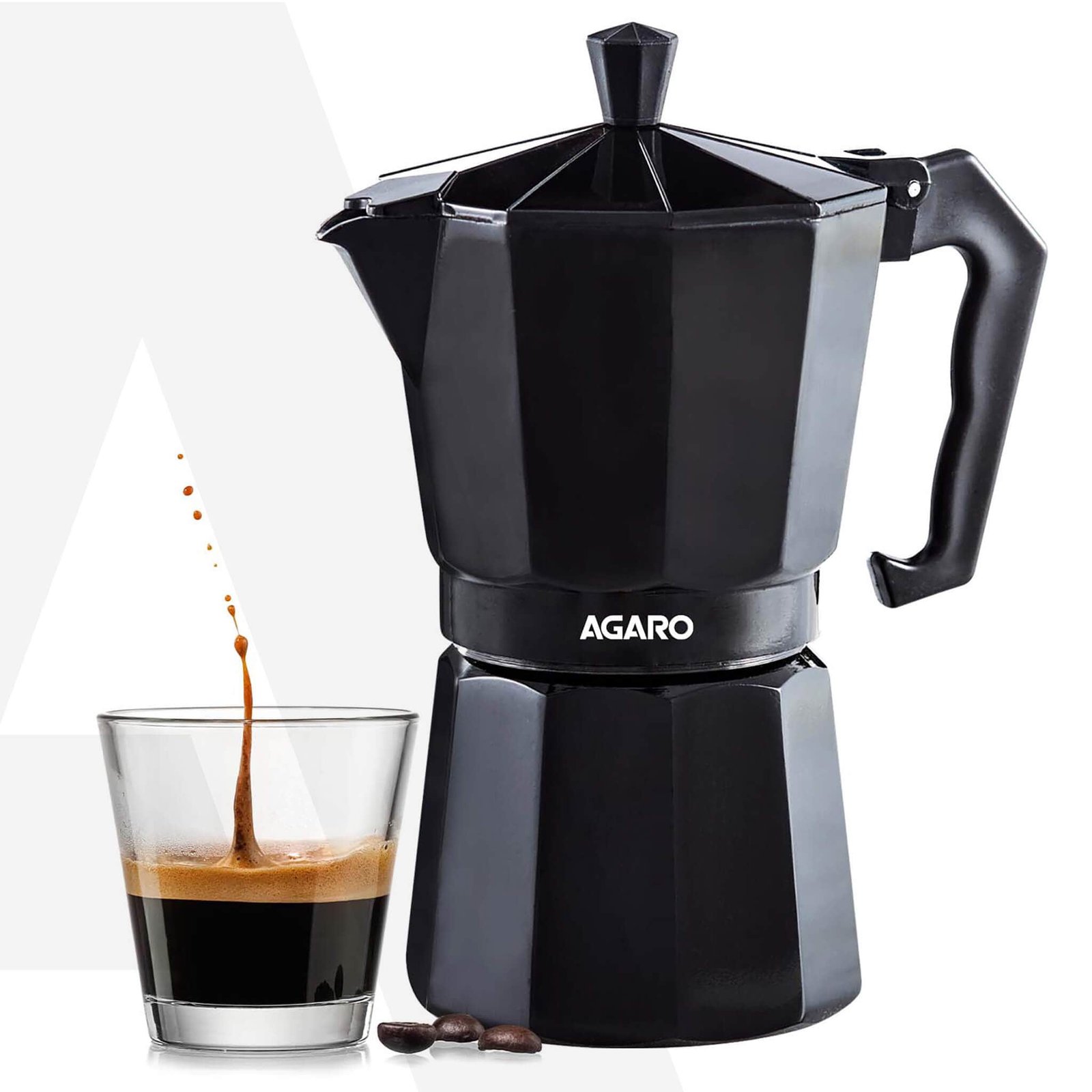
The AGARO Classic Moka Pot 6-cup.
The cheapest moka pot you can buy today — 240 ml of aluminium stovetop coffee, six small cups at a time.
The essentials
- Aluminium, classic Bialetti-pattern design
- 6 cups · 240 ml per brew
- Gas or electric coil stove — not induction
- Hand-wash only
- BESTSELLER badge on Flipkart · rated 4.1★ from 248 ratings
What stands out
- The cheapest moka pot you can buy today
- One brew covers two or three morning drinkers
- AGARO’s domestic service network for warranty claims and spares
Keep in mind
- “6 cups” means six small moka cups of 40–50 ml, not six mugs
- Aluminium — no induction, hand-wash only
- A bigger, slower brew that is overkill for a solo drinker
₹806
The AGARO store lists the same pot as 240 ml for ₹799. It was ₹849 at our last check, and a Flipkart Axis or SBI card brings it to about ₹765. Our full roundup is in our Best Moka Pot in India guide.
InstaCuppa Classic Moka Pot 300 ml — Best mid-range pick
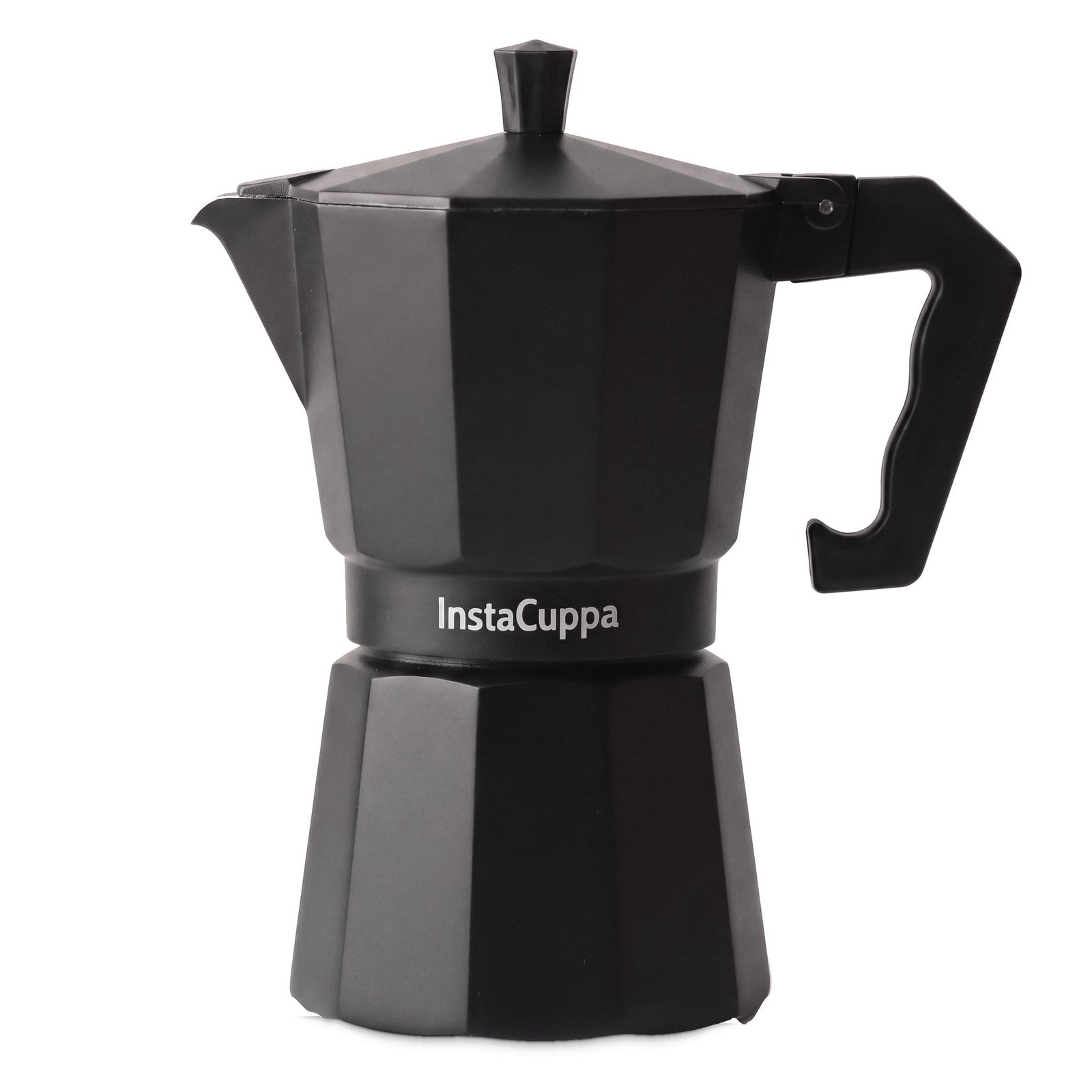
The InstaCuppa Classic Moka Pot 300 ml.
Our pick for daily milk coffee — a 300 ml aluminium stovetop pot in black, silver or red.
The essentials
- Aluminium stovetop pot — 300 ml
- About 6 small espresso-style cups, or two generous milk coffees
- Brews in 5–7 minutes on a gas stove
- About 1–2 bar — espresso-style, not true espresso
- Colours: black, silver or red
- Rated 4.66★ from 67 reviews
What stands out
- Our pick for daily milk coffee
- InstaCuppa’s build finish and store support behind it
- Its price has not moved since our tracking began — no sale to wait for
Keep in mind
- Aluminium — it will not work on an induction hob
- It is a 300 ml pot, not a 3-cup pot — moka “cups” are small
- The AGARO Classic brews the identical method for about half the price
₹1,999
InstaCuppa Electric Moka Pot 300 ml — Best no-stove pick

The InstaCuppa Electric Moka Pot 300 ml.
The answer to the induction problem and to kitchens with no gas flame: it plugs in and makes the same 300 ml of strong coffee.
The essentials
- 300 ml · 6 espresso cups
- Food-grade aluminium body on its own power base
- Brews in 3–4 minutes; automatic cut-off and keep-warm
- 230 V, standard Indian 3-pin plug — no stove needed
What stands out
- Works where aluminium stovetop pots cannot — induction kitchens, hostels, offices
- One-button brewing with automatic cut-off
- The most stable price in our moka coverage — unmoved in five weeks
Keep in mind
- Aluminium body means hand-washing
- On a gas stove it buys nothing — the stovetop Classic brews the same coffee for less
₹3,599
It is also listed on Amazon.in at ₹3,199 against a ₹5,999 MRP — the MRP is inflated theatre, ₹3,199 is the real price.
Bialetti Moka Express 3-cup — The original
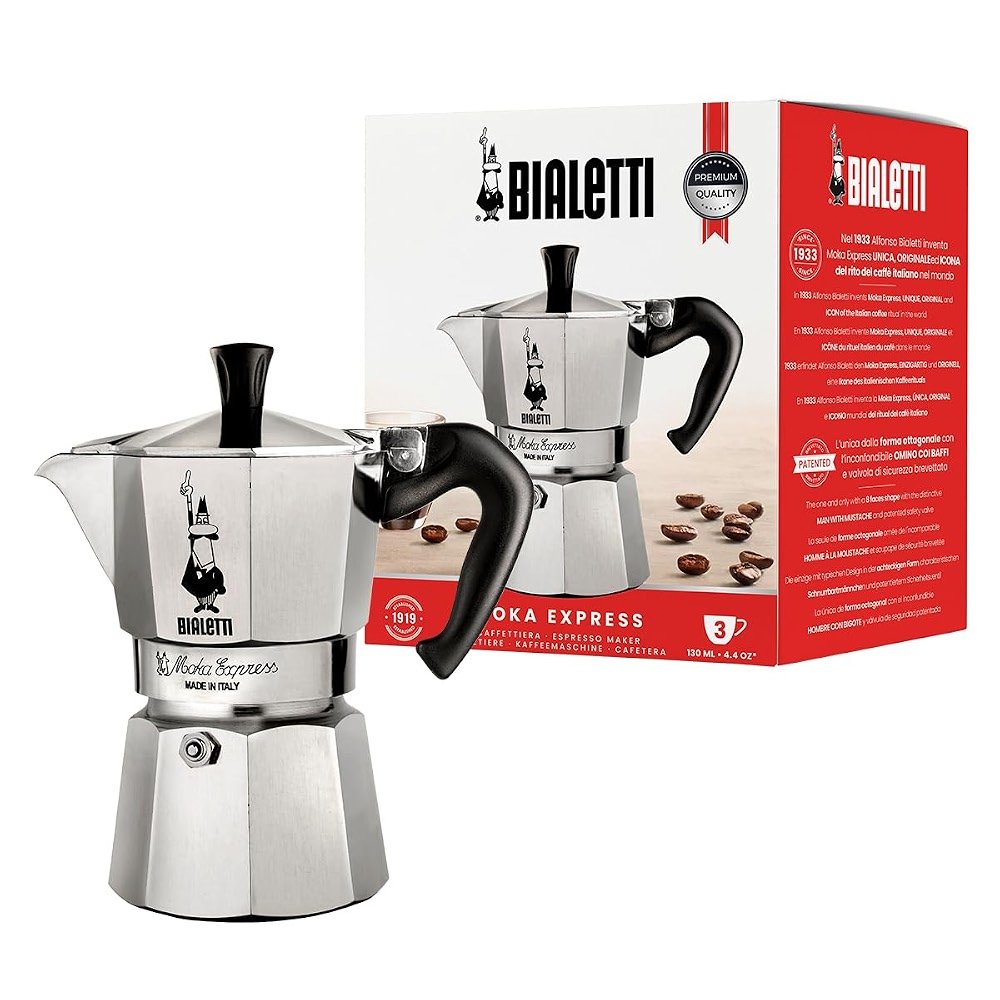
The Bialetti Moka Express 3-cup.
The Italian original — the reference every other moka pot is measured against.
The essentials
- Food-grade aluminium — the 1933 original design
- 3 cups · about 130 ml of brew
- Dose: about 15–20 g of medium-fine coffee
- Gas or electric coil — not induction
- Hand-wash only
What stands out
- The cleanest, most repeatable moka brew we have priced
- Threads seat cleanly — pressure goes through the coffee instead of leaking around it
- A design that has not needed changing since 1933
Keep in mind
- Aluminium — gas or coil only, no induction
- Hand-wash only — aluminium discolours in a dishwasher
The Italian original is sold on Amazon.in, but Amazon.in returned site-wide 503 errors all morning on 6 November, so no live price, rating or stock could be read — and none is guessed here. Verified instead: Bialetti’s store lists the Moka Express from ₹2,329 (1-cup) to ₹9,899 (12-cup), the 6-cup at ₹4,039, and the coloured Rainbow 3-cup variants were ₹3,029 on Amazon.in in tracker crawls from 2–6 November. Budget around ₹3,000–₹3,500 for the 3-cup; it is not sold on Flipkart.

What It Really Costs: The First-Year Total
Nobody totals this up, and it changes the decision: the sticker price is the smallest part of owning either brewer — coffee is the real cost, and the grinder is the hidden one.
Our assumptions, stated plainly: one brew a day, whole-bean coffee at ₹1,060 per kilo (Cothas Speciality Blend 500 g at ₹530 on the Cothas store), a French press mug using 15 g of coffee and a full 300 ml moka pot using 18 g. At those rates a French press mug costs about ₹16 of coffee and a full moka pot about ₹19 — roughly ₹3.20 per small cup.
| First year (one brew a day) | French press | Moka pot |
|---|---|---|
| Brewer (cheapest buyable today) | ₹678 (AGARO Delite) | ₹806 (AGARO Classic) |
| Grinder (both need one — see below) | ₹1,163 (AGARO Elite manual) | ₹1,163 (AGARO Elite manual) |
| Coffee for a year | ~₹5,800 (15 g × 365 days) | ~₹7,000 (18 g × 365 days) |
| First-year total | ~₹7,600 | ~₹9,000 |
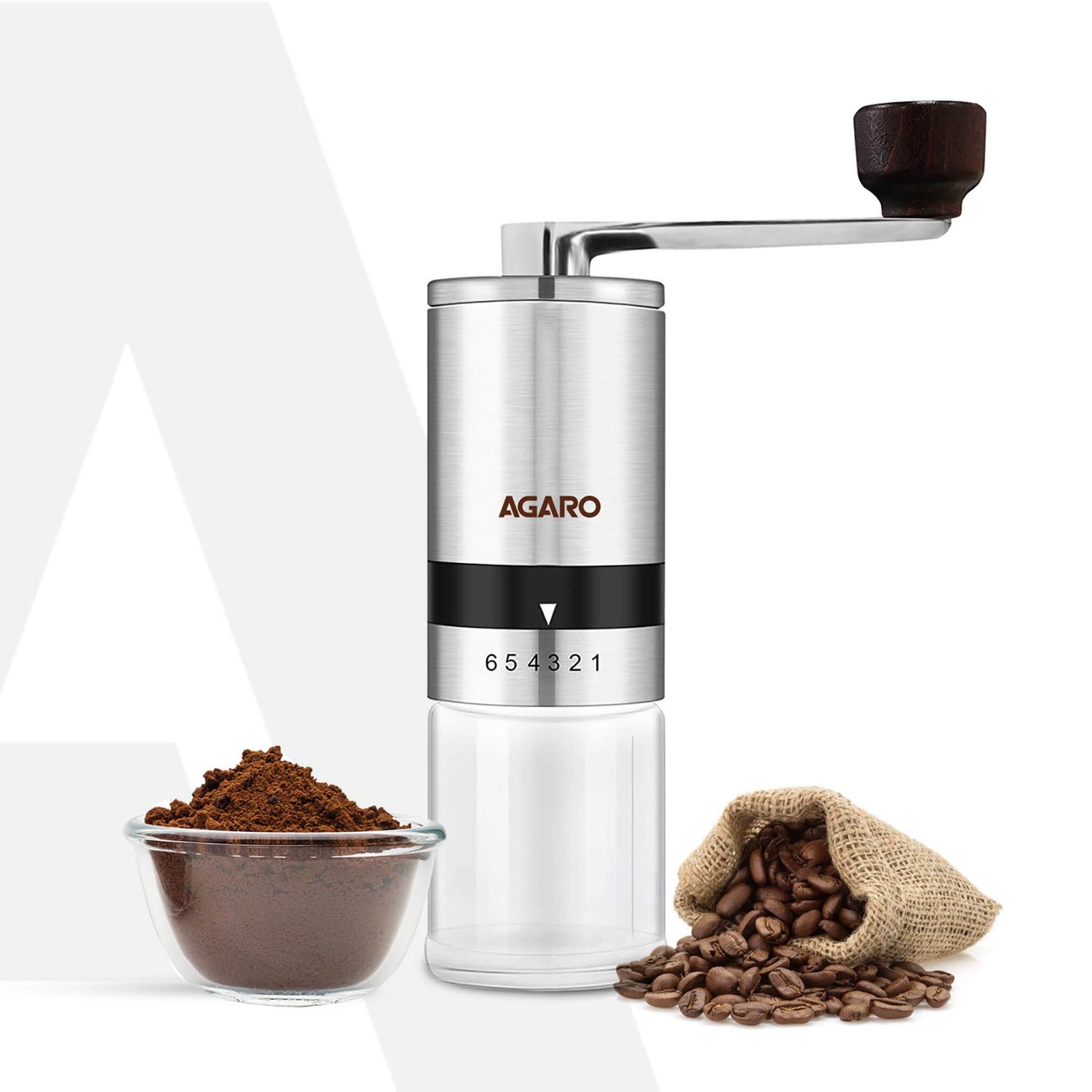
Two things jump out. First, the grinder costs more than either brewer — and both need one. A French press needs coarse grounds and a moka pot needs fine ones, and pre-ground filter coffee powder is too fine for a French press (sludge) and borderline too fine for a moka pot (bitter). The AGARO Elite manual grinder at ₹1,163 (MRP ₹2,999) covers both grinds; the InstaCuppa 40-setting manual grinder at ₹1,199 is the alternative. Our Best Coffee Grinder Under ₹3000 in India guide covers both. Second, “buy both” is cheaper than it sounds: both brewers plus one grinder is ₹678 + ₹806 + ₹1,163 = ₹2,647 — less than half the cheapest real pump espresso machine (Prestige 41152 at ₹5,395; see our Coffee Machine Price in India guide).

Three Mistakes That Ruin Either Brewer
1. The wrong grind. Coarse grounds in a moka pot let water rush through — weak, watery coffee. Fine grounds in a French press slip through the mesh and turn the cup to sludge. Grind coarse for the press, fine for the moka pot, never swap them.
2. An aluminium moka pot on an induction hob. It simply will not heat — aluminium is not magnetic. Check your hob before you buy: gas or coil stove, any aluminium moka pot works; induction, you need stainless steel, an adapter plate, or the electric moka pot.
3. Buying a French press for espresso-style milk drinks. If your dream is a daily latte, the French press will disappoint you every morning — its coffee is too dilute for milk. Buy the moka pot instead, or read our Moka Pot vs South Indian Filter guide if your milk coffee is kaapi-style.
Verdict
Buy the moka pot if you drink milk coffee, want small strong cups, or brew on gas for one or two people — the AGARO Classic at ₹806 is the cheapest honest start, the InstaCuppa Classic at ₹1,799 the better daily driver. Buy the French press if you drink black coffee by the mug, brew for a family, or cook on induction — the AGARO Delite at ₹678 is the cheapest honest start, the InstaCuppa Aero at ₹1,499 the best-rated 600 ml press we verified. Still undecided? Buy both: ₹2,647 of gear, one grinder.
Frequently Asked Questions
Which is better, French press or moka pot?
Neither — it depends on what you drink. For milk-based drinks, the moka pot is better: its concentrated coffee stands up to milk. For black coffee by the mug, or brewing for two or more people, the French press is better. If you drink both, buy both: ₹1,484 together before the grinder.
Is moka pot stronger than French press?
Per ounce, yes — about four to five times stronger (roughly 50–65 mg of caffeine per ounce against roughly 10–15 mg for French press). Per serving, the gap mostly disappears: a 60 ml moka serving has about 100–130 mg and a 240 ml French press mug has about 80–120 mg, because the mug is four times bigger.
Does moka pot coffee have more caffeine?
Per sip, yes; per serving, about the same. A Swiss lab study ranking nine methods by caffeine per millilitre put espresso first, then moka pot, then French press, then filter coffee. A small moka cup feels much stronger, but a full French press mug delivers a similar total dose — and one 300 ml moka pot (about 600–780 mg) is meant to be shared, not drunk alone.
Is moka pot healthier than French press?
Neither is meaningfully healthier. Both use a metal filter, so both keep the coffee oils — including cafestol, linked to raised LDL cholesterol — in the cup. Paper-filtered coffee (pour-over, or South Indian filter coffee) removes most of it, so if cholesterol is a concern, choose that; between these two, the difference is too small to decide on.
Can I use the same coffee powder for both?
No — the grind differs, and it matters. A French press needs a coarse grind (rock salt) and a moka pot a fine grind (table salt). The pre-ground filter coffee powder most Indian homes buy is too fine for a French press and borderline too fine for a moka pot. Buy whole beans and a manual grinder (the AGARO Elite at ₹1,163 covers both), or buy from a roaster who grinds to order.
Can I use a moka pot on an induction stove?
An aluminium moka pot — the Bialetti classic, the AGARO Classic and the InstaCuppa Classic — will not work on induction, because aluminium is not magnetic. On an induction hob you need a stainless steel moka pot, an induction adapter plate, or an electric moka pot like the InstaCuppa Electric at ₹3,199. A French press needs no stove, so it works in any kitchen.
Prices checked on 6 November 2026 on brand stores (AGARO, InstaCuppa, Wonderchef) and Flipkart, cross-checked with the price-intel tracker. Amazon.in pages could not be read today (site-wide 503 errors, 09:59–10:13 IST), so no Amazon.in price is quoted as today’s price; the Bialetti 3-cup is given as the verified store range. Wonderchef 350 ml at ₹499 on Flipkart showed “Notify Me” only. Prices change frequently — the price at checkout is what counts.
About the author
Kaapi Craft Editorial — We compare specifications from manufacturer product pages, verify street prices across Amazon.in, Flipkart and official brand stores in India, and check stock status before recommending anything. Our picks are never paid placements.