The best coffee beans in India for home brewing are the bags that survive two tests at once: they taste good in YOUR brewer, and their price per 100 g survives a calculator. Short answer: Blue Tokai Attikan Estate is the best overall buy — ₹651 for 250 g on Amazon (₹700 on the brand’s own store), a dark-medium single origin that works in everything from espresso to South Indian filter; Siruvani 100% Arabica is the cheapest cup here at ₹13.50, in a 500 g bag for ₹450; and Sleepy Owl Original at ₹599 is the easiest first specialty bag if you are buying whole beans for the first time. We checked every price below on 23 November 2026 and worked out the per-100 g and per-cup cost of each bag, because a ₹450 bag and a ₹940 bag cannot be compared until they are on the same scale.Same price as when this guide was published (₹599, 23 Nov 2026).
Last updated: 23 November 2026.
Quick verdict —
- Best overall: Blue Tokai Attikan Estate — the most versatile bag here, and the only one with an Amazon’s Choice badge and 1,000+ buys a month.
- Best value per gram: Siruvani 100% Arabica — ₹90 per 100 g, less than a third of the dearest bag.
- Best first specialty bag: Sleepy Owl Original — a forgiving medium roast, whole bean or ground, at ₹599.
- Best premium: Araku Grand Reserve — certified organic, roasted to order, the highest-rated bag here at 4.8 stars.
How to pick the best coffee beans in India for home brewing
The one constraint that splits coffee beans for an Indian home brewer is your brewer — and whether you drink your coffee black or milky. That decides the bag before price or brand does:
- You brew espresso or moka pot, and drink it milky: buy for body and chocolate. Blue Tokai Attikan (dark medium, built for pressure) and Siruvani (100% Arabica, holds up under milk) are the two that do not go thin in milk.
- You brew pour-over, Aeropress or French press, and drink it black: buy pure Arabica, medium roast. Third Wave Chikmagalur and Araku Grand Reserve show the most character without milk.
- You brew South Indian filter coffee: buy a medium or medium-dark roast that takes chicory-free decoction well — Attikan is ground for it on the brand’s own store, and Sleepy Owl’s medium roast is the forgiving option. Our step-by-step filter guide is How to Make South Indian Filter Coffee at Home.
- You own a grinder: buy whole beans. Five of the six bags here are whole bean; grind fresh and the coffee stays good for a month.
- You do not own a grinder: buy a ground variant — Toffee Baba Budangiri sells every grind from French press to South Indian filter, and Sleepy Owl lets you pick the grind at checkout. Ground coffee goes stale in 2–3 weeks, so buy small. If you are shopping for a grinder first, see our best coffee grinder under ₹3,000 guide.
- You drink two or more cups a day: buy the big bag. Siruvani’s 500 g at ₹90 per 100 g is the cheapest coffee in this guide by a wide margin — but only if you finish it within a month of opening.
- You are buying your first bag of beans ever: buy the cheapest way in that still tastes like specialty coffee. Siruvani at ₹450 for 500 g, or Sleepy Owl at ₹599 if you want a roaster that prints its sourcing.
Decision checklist — run through it before you order: (1) Brewer first, brand second: match the roast to your brewer — medium-dark for espresso and moka pot, medium for pour-over and French press. (2) Milk habit: milky = blend or robusta-led, or a dark-medium arabica with body; black = pure Arabica, medium. (3) Grinder or not: whole bean if you own one; a named grind if you do not. (4) Budget per cup, not pack price: ₹13.50–₹56.40 here at a 15 g dose — pick the per-cup figure. (5) Roast date: the bag should state when it was roasted — Araku prints it on the pack; budget bags often do not, so buy small and buy often. (6) Pack size: 250 g is ~16 cups, 500 g is ~33 cups; match the bag to how fast you drink. (7) Rating-pool size: under ~50 ratings, treat the stars as a hint, not proof — Araku’s 4.8 stars rest on 52 reviews, Siruvani’s 3.8 on 251.
At a glance: the six bags, ranked
| # | Bag | Pack | Roast | Price | Per 100 g | Per cup (15 g) | Rating | Buy |
|---|---|---|---|---|---|---|---|---|
| 1 | Blue Tokai Attikan Estate — Best overall | 250 g | Dark medium | ₹651 Amazon · ₹700 brand store | ₹260.40 | ₹39.06 | 4.1★ (194) | Buy on Amazon |
| 2 | Siruvani 100% Arabica — Best value per gram | 500 g | Medium | ₹450 | ₹90.00 | ₹13.50 | 3.8★ (251) | Buy on Amazon |
| 3 | Sleepy Owl Original — Best first specialty bag | 250 g | Medium | ₹599 | ₹239.60 | ₹35.94 | Rated 4.5★ · 276 ratings (Sleepy Owl, checked 23 Nov) | Buy on Amazon |
| 4 | Third Wave Chikmagalur Region — Best for pour-over | 250 g | Medium | ₹700 | ₹280.00 | ₹42.00 | No rating on brand page | Buy at Third Wave |
| 5 | Toffee Coffee Baba Budangiri — Best single-origin under ₹500 | 250 g | Medium dark | ₹450 | ₹180.00 | ₹27.00 | 4.2★ (122) | Buy on Amazon |
| 6 | Araku Grand Reserve — Best premium | 250 g | Medium | ₹940 | ₹376.00 | ₹56.40 | 4.8★ (52) | Buy at Araku Coffee |
Prices and ratings checked 23 November 2026. Sleepy Owl’s price is tracked live by our price tracker; the other five are dated store checks — Amazon.in for Attikan (whole-bean variant), Siruvani and Toffee, and the brand’s own store for Third Wave and Araku. The Toffee price is for the French Press grind — other grinds on the same listing run ₹405–₹450. Per-cup cost uses a 15 g dose.
What a 250 g bag really costs — price per 100 g
Pack prices lie. A ₹450 bag can be the cheapest coffee in the guide or the dearest, depending on how many grams are inside it. The only honest comparison is price per 100 g — pack price divided by pack weight — and on that scale the six bags spread from ₹90 to ₹376, a four-fold gap:
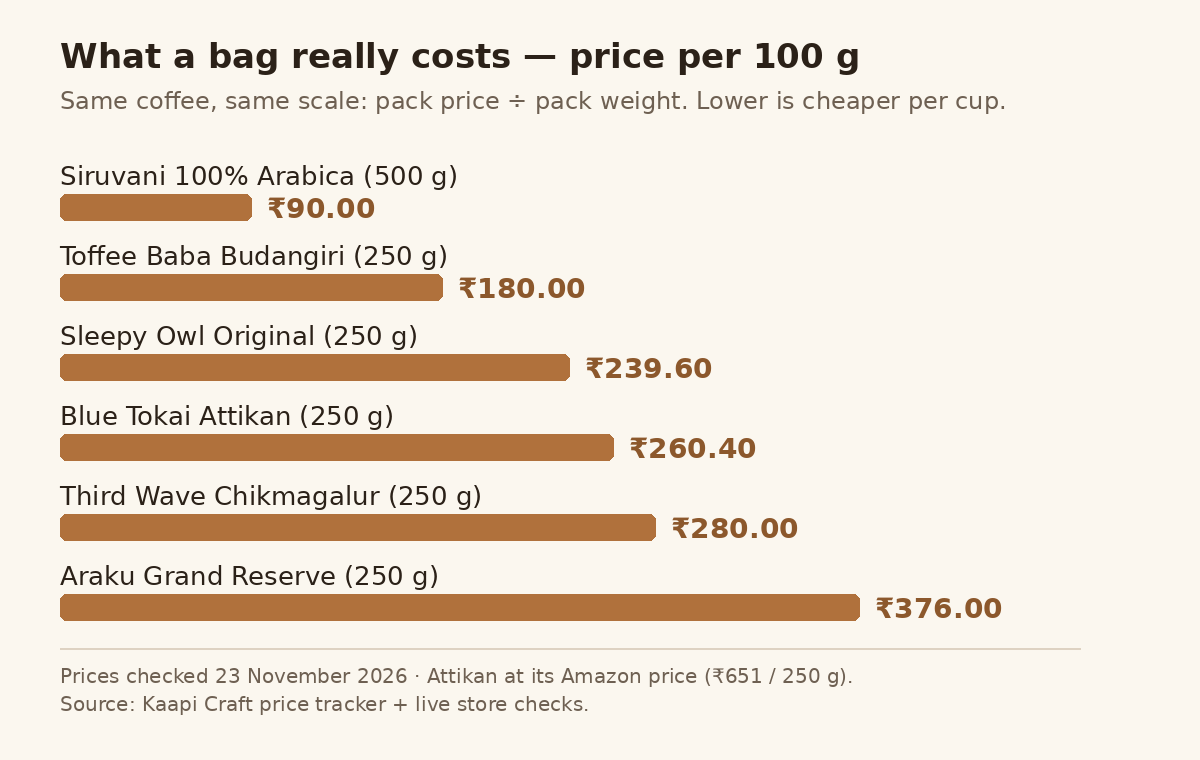
The chart is the whole buying decision in one picture. Siruvani’s 500 g bag is less than half the per-gram price of the next-cheapest bag — the only bag here under ₹100 per 100 g. Everything else clusters between ₹180 and ₹376, and the gap between the three premium single origins (Attikan ₹260.40, Third Wave ₹280, Araku ₹376) is taste and traceability, not value: you are paying for a named estate, an organic certificate, or a roast date on the pack.
| Bag | Per cup (15 g) | Per double shot (18 g) | One cup a day for a month | Verdict |
|---|---|---|---|---|
| Siruvani 100% Arabica | ₹13.50 | ₹16.20 | ₹405 | Cheapest cup by far |
| Toffee Baba Budangiri | ₹27.00 | ₹32.40 | ₹810 | Cheapest single origin |
| Sleepy Owl Original | ₹35.94 | ₹43.13 | ₹1,078 | Mid-pack, forgiving |
| Blue Tokai Attikan | ₹39.06 | ₹46.87 | ₹1,172 | Best overall at a fair cup cost |
| Third Wave Chikmagalur | ₹42.00 | ₹50.40 | ₹1,260 | Premium, black-coffee value |
| Araku Grand Reserve | ₹56.40 | ₹67.68 | ₹1,692 | Dearest cup — special-occasion pricing |
Per-cup cost uses a 15 g dose (pour-over / French press); per double shot uses 18 g (espresso). A 250 g bag makes about 16 cups at 15 g, or about 13 double shots at 18 g. Figures from the prices checked 23 November 2026.
That monthly column is the running cost of home brewing, and it is the number that matters. One cup a day for a month costs ₹405 of Siruvani or ₹1,692 of Araku — against about ₹6,000 for the same 30 cups at a café at ₹200 a cup (a round figure for comparison). Even the dearest bag here brews at home for less than a third of café money. The beans are the consumable, so the purchase price is only the entry ticket: a ₹450 bag that you finish in two weeks costs you less per month than a ₹940 bag that goes stale half-drunk.
PRO TIP — Compare every bag per 100 g before you compare pack prices. A 500 g bag at ₹450 (₹90 per 100 g) is cheaper coffee than a 250 g bag at ₹300 (₹120 per 100 g) — the smaller pack only wins if you cannot finish the big one within a month.
The six bags, pick by pick
1. Blue Tokai Attikan Estate — Best overall
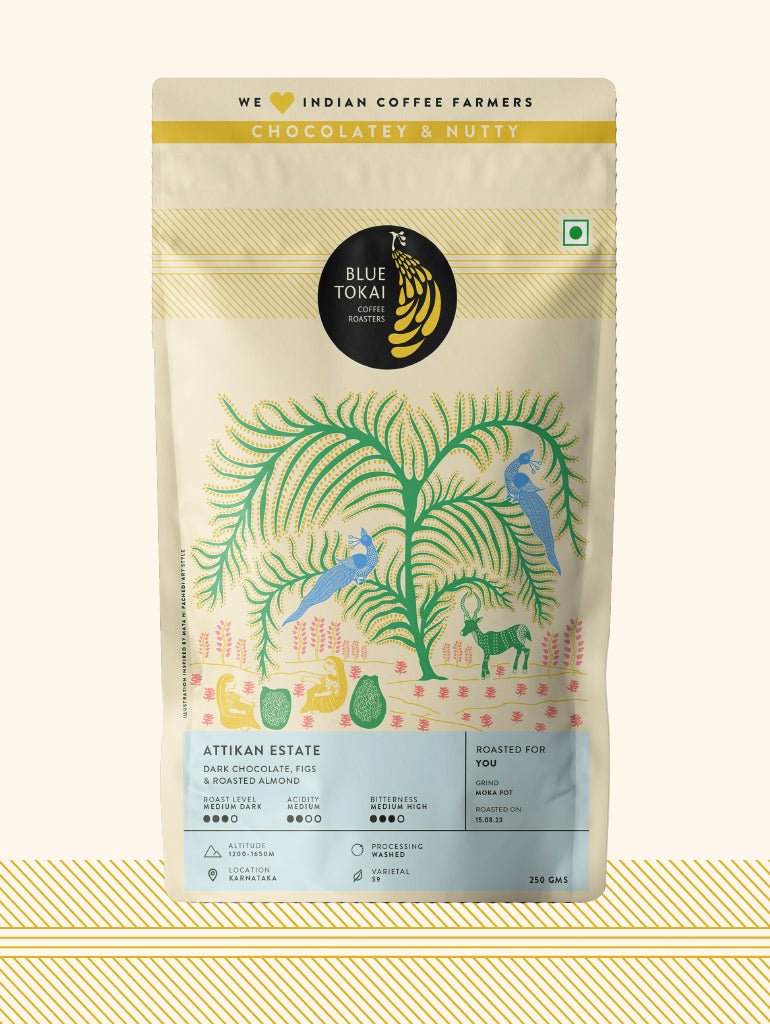
The Blue Tokai Attikan Estate coffee beans, 250 g bag. Photo: Blue Tokai.
The most versatile bag here — the only one with an Amazon’s Choice badge and 1,000+ buys a month, and it brews well in every method we cover.
The essentials
- 250 g whole beans — 100% Arabica, dark medium roast
- Single origin: Attikan Estate, Biligiriranga Hills, Karnataka
- Washed S795 & Catimor; 1,220–1,320 m altitude
- Notes of green apple, strawberry and cocoa nibs
- Grinds for every brewer: whole bean, espresso, French press, pour-over, South Indian filter, moka pot, Aeropress, cold brew
- Amazon’s Choice; 1,000+ bought in the past month
What stands out
- The only pick here that genuinely suits all six brewers in this guide
- Cheapest premium single origin per cup at ₹39.06 — undercutting Third Wave and Araku
- Amazon’s whole-bean price (₹651) undercuts the brand store (₹700) by ₹49
- Blue Tokai works with 80+ farms and is India’s best-known specialty roaster (founded 2013)
Keep in mind
- Dark medium roast with bright acidity — it can taste sharp to drinkers who like their coffee very dark
- The Amazon price varies by grind: ground variants on the same listing run ₹585.90–₹651, so check the variant before you pay
- No roast date is printed on the Amazon listing — buy from the brand store if the roast date matters to you
₹651 at Amazon · ₹700 at Blue Tokai · checked 23 November 2026
Attikan wins because it refuses to be a one-brewer bean. The same bag pulls a respectable espresso shot, survives milk in a moka pot, and still shows its green-apple acidity in a pour-over — the dark-medium roast is the compromise that makes that possible. At ₹651 on Amazon it is also the cheapest of the three premium single origins per cup (₹39.06 against Third Wave’s ₹42 and Araku’s ₹56.40), so the “best overall” pick is not the dearest one. Buy it on Amazon if you want the lower price and the 4.1-star, 194-rating record behind it; buy it on the brand’s own store if you want the roast-date transparency and the full grind menu.
Best for: the one-bag household — espresso in the morning, filter in the evening — and anyone who wants a single origin without giving up milk coffee.
2. Siruvani 100% Arabica — Best value per gram
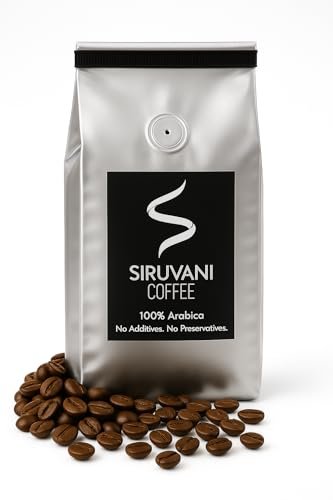
The Siruvani 100% Arabica coffee beans, 500 g bag. Photo: Amazon.in.
The cheapest cup in the guide at ₹13.50 — a 500 g bag of 100% Arabica for the price of most 250 g bags.
The essentials
- 500 g whole beans — 100% Arabica, medium roast
- ₹90 per 100 g — less than half the next-cheapest bag here
- 100+ bought in the past month; #23 in Amazon.in Roasted Whole Coffee Beans best sellers
- Free delivery, in stock and Fulfilled
What stands out
- ₹13.50 a cup and ₹405 for a month of daily coffee — the lowest running cost in this guide by a wide margin
- The 500 g pack is the honest bulk buy: it only makes sense if you drink 2+ cups a day
- 251 ratings — the second-biggest review pool here, so the 3.8 stars mean more than a small-sample score
Keep in mind
- Owner reviews report batch-to-batch taste inconsistency — one 3-star review is titled “Affordable Coffee, but Inconsistent Taste Across Batches”
- 19% of ratings are 1–2 stars, the highest low-rating share in this guide; one verified 1-star review calls it “extremely bitter”
- No roast date is stated on the listing — buy it expecting a workhorse bag, not a connoisseur one
₹450 at Amazon · checked 23 November 2026
Siruvani is the value pick with its eyes open. No other bag here comes close on price — ₹900 a kilo against ₹2,604 for Attikan — and for milky South Indian filter or a daily moka pot it is genuinely hard to beat. But the honest price of that value is variance: nearly one in five owners rates it 1–2 stars, and the recurring complaint is that one bag tastes different from the next. Our advice is to treat it as a daily-drinker bag, not a tasting bag — buy the 500 g only if you drink two or more cups a day and will finish it within a month, and if your first bag tastes off, that is the known risk of the cheapest cup, not a one-off defect. If you want the same budget band with a steadier record, our budget beans guide compares seven bags under ₹500 in full.
Best for: high-volume daily drinkers, milky coffee, and anyone whose main question is “what is the cheapest honest cup?”
3. Sleepy Owl Original — Best first specialty bag

The Sleepy Owl Original whole coffee beans, 250 g bag. Photo: Sleepy Owl.
The forgiving first step into specialty beans — a smooth medium roast from Chikmagalur, sold whole or ground, at a price that has not moved all quarter.
The essentials
- 250 g whole beans — 100% Arabica, medium roast, from Chikmagalur
- Grind options at checkout: whole bean, coarse, medium, fine
- Packs of 1, 2 or 3 on the brand store
- Amazon listing also ₹599 (checked 23 November 2026)
What stands out
- The only tracked bag here — our tracker has watched it since 15 October 2026 and it has never moved off ₹599
- Smooth, chocolatey, low-acid profile that forgives a coarse grind and a heavy hand with milk
- Same ₹599 on the brand store and on Amazon — no need to hunt for the cheaper channel
Keep in mind
- It is a friendly medium roast, not a characterful one — pour-over drinkers who want fruit and florals will find it plain
- The Amazon rating (4.1★) runs lower than the brand store’s (4.45★) — the same coffee, different audiences
₹599 at Amazon · Rated 4.5★ · 276 ratings (Sleepy Owl, checked 23 Nov)
Sleepy Owl is the bag to buy when you are not sure what you like yet. The medium roast is deliberately unchallenging — chocolatey, nutty, low-acid — which is exactly what a first-time whole-bean buyer needs, because it tastes good even when the grind is a little off or the ratio is a little wrong. It is also the most price-honest bag here: our tracker has recorded ₹599 on every check since 15 October 2026, with no dip and no spike, so there is no sale to wait for and no reason to delay — the lowest tracked price is ₹599 and it sits at ₹599 today. If you want the grind chosen for you, pick your brewer’s grind at checkout on the brand store; the same bag is also ₹599 on Amazon (checked 23 November 2026).
Best for: first-time whole-bean buyers, milky French press and moka pot, and anyone who wants a set-and-forget daily bag.
Check the latest offer and conditions: Sleepy Owl Original on our deals page.
4. Third Wave Chikmagalur Region — Best for pour-over

The Third Wave Chikmagalur Region coffee beans, 250 g bag. Photo: Third Wave Coffee.
The black-coffee specialist — stone fruit and honeyed sweetness that only shows itself when nothing (no milk, no pressure) gets in the way.
The essentials
- 250 g whole beans — 100% Arabica, medium roast, washed
- Single origin: Chikmagalur region, Karnataka; hand-picked, sun-dried
- Notes of stone fruit and raisins, with sweet honey and juicy peach
- Grinds: whole beans, coarse, medium, fine
- Free delivery on orders over ₹400; roasted in-house
What stands out
- The most expressive black cup under ₹750 in this guide
- Plants grown alongside pepper, cacao and cardamom — the region’s flavour, not a generic “Indian” profile
- Same ₹700 for whole bean or any grind — no grind surcharge
Keep in mind
- Region-level, not a single estate — no estate name or altitude is stated on the page, so it is the least traceable pick here
- No reviews section at all on the brand page — there is no owner record to check against
- Medium roast with real acidity: it goes thin and sharp under a lot of milk
₹700 at Third Wave Coffee · checked 23 November 2026
Third Wave’s Chikmagalur is the bag for the reader who has already decided they drink their coffee black. In a pour-over or Aeropress the stone-fruit and honey notes are genuinely there, and at ₹42 a cup it is the cheapest way to taste what a single origin can do without milk covering it up. The honest limit is traceability: this is a region coffee, not an estate coffee, so you are buying Third Wave’s sourcing rather than a farm you can name — and with no reviews on the page, you are taking the roaster’s word for it. That is a fair trade at ₹700, but it is why Attikan, with its named estate and 194 Amazon ratings, outranks it overall. For the full estate-level deep-dive, see our single-origin guide.
Best for: pour-over, Aeropress and French press drinkers who take it black and want to taste the origin.
5. Toffee Coffee Baba Budangiri — Best single-origin under ₹500
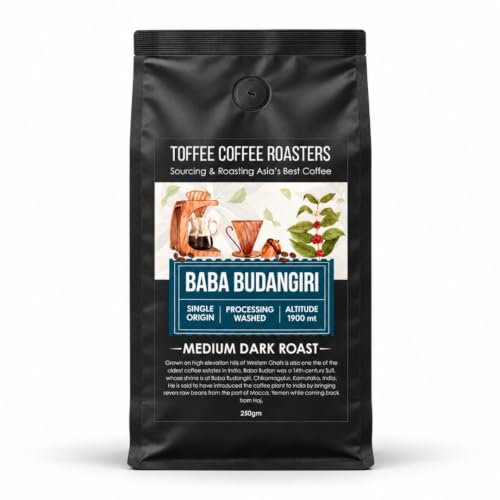
The Toffee Coffee Baba Budangiri coffee beans, 250 g bag. Photo: Amazon.in.
The cheapest way into single-origin coffee — a medium-dark Baba Budangiri that works best in a French press, with one pricing quirk to watch.
The essentials
- 250 g — 100% Arabica, medium-dark roast, Baba Budangiri estate
- Notes of toasted nuts, earthy and dark chocolate
- Every grind sold: whole beans, French press, pour-over, moka pot, South Indian filter, cold brew and more
- 100+ bought in the past month; Fulfilled
What stands out
- ₹27 a cup for a named single origin — the cheapest origin coffee in this guide
- 4.2 stars on 122 ratings, the second-highest rating here
- One listing, every grind — you do not need a grinder to buy it
Keep in mind
- The price depends on the grind you pick: French Press is ₹450, other grinds on the same listing run ₹405–₹450 — check the variant before you pay
- A 3-star owner review (8 October 2026) says “the coffee fails to stand out. The grind quality is also indifferent” — it is a solid daily cup, not a memorable one
- No roast date is stated on the listing
₹450 at Amazon (French Press grind) · checked 23 November 2026
Toffee’s Baba Budangiri is the value single origin: a named estate, a medium-dark roast that suits French press and moka pot, and a price that undercuts every other origin bag here by ₹150 or more. The catch is the one this guide’s review-mining surfaced and the SERP guides miss — the price moves with the grind. The French Press grind is ₹450, but other grinds on the same listing are ₹405 and ₹427.50, and owners have flagged the “erratic pricing” across variants as a real annoyance. So pick your grind first, read the price for that grind, and do not assume the headline price is the one you will pay. At ₹27 a cup it is still the cheapest single-origin cup here even at its dearest grind.
Best for: French press and moka pot drinkers who want a named origin without paying specialty prices — and buyers without a grinder.
6. Araku Grand Reserve — Best premium

The Araku Grand Reserve coffee beans, 250 g pouch. Photo: Araku Coffee.
The special-occasion bag — certified organic, roasted to order with the roast date on the pack, and the highest-rated coffee in this guide.
The essentials
- 250 g pouch — 100% Arabica, medium roast, certified organic and Fair Trade
- Grand Cru plots, Araku Valley; terroir 3,307–3,908 ft; Natural & Washed process
- Notes of tropical fruits, dates, citrus and floral
- Roasted to order; roast date printed on the packaging; nitrogen-flushed
- Grinds: whole beans, very fine, fine, medium, coarse
What stands out
- 4.8 stars on 52 reviews — the highest rating in this guide
- The only bag here with a roast date on the pack and organic + Fair Trade certification
- Grown by named farmers (Badnaini Subadramma and Sombabu) in a cooperative backing 11,000+ farmers
Keep in mind
- ₹56.40 a cup — more than four times Siruvani’s cup cost, and ₹1,692 for a month of daily cups
- Medium roast, delicate and floral: one 4-star owner found the hot Aeropress brew “wasn’t to my liking” (though “on ice one of the tastiest brews I’ve had”)
- The tin costs more than the pouch (₹1,030 vs ₹940 for 250 g) — buy the pouch unless you want the tin
₹940 at Araku Coffee (Pouch) · checked 23 November 2026
Araku Grand Reserve is the bag you buy when the coffee itself is the point. It is the only pick here that is certified organic and Fair Trade, the only one roasted to order with the roast date printed on the pack, and the only one whose farmers are named on the product page. The cup matches the story: tropical fruit and citrus over a floral base, best black or with a splash of milk, and — per one owner’s note — genuinely excellent over ice. At ₹56.40 a cup it is a weekend coffee, not a daily one, and the medium roast will taste light to anyone coming from dark-roast habits. Buy the pouch, not the tin: the same 250 g in the tin is ₹1,030.
Best for: black-coffee drinkers who want the most traceable, freshest-roasted bag in India — and for gifting.
Whole bean or ground — and how fresh is fresh?
Whole beans ground at home, right before brewing, will always beat pre-ground coffee of the same origin — that is the one rule every source in this guide agrees on. A whole bean keeps its aromatics locked inside; once it is ground, the surface area multiplies and the good stuff escapes in days, not weeks. If you own a grinder, buy whole beans — five of the six picks here are whole bean. If you do not, buy a named grind for your brewer (Toffee sells every grind; Sleepy Owl lets you pick at checkout) and finish the bag within 2–3 weeks.
Freshness has a window, not a date. Most filter and espresso coffee drinks best somewhere between about seven and thirty days off roast: light roasts need longer to settle, dark roasts fade faster. The National Coffee Association’s storage guidance is the practical version: opened whole beans keep about one to three weeks in an airtight container at room temperature, opened ground coffee about one to two weeks, and frozen whole beans keep three to four months. So buy 250 g, not 1 kg, unless you drink two cups a day — and check the roast date on the bag before you buy. Araku prints it on the pack; the budget bags in this guide generally do not, which is itself a reason to buy small and buy often.
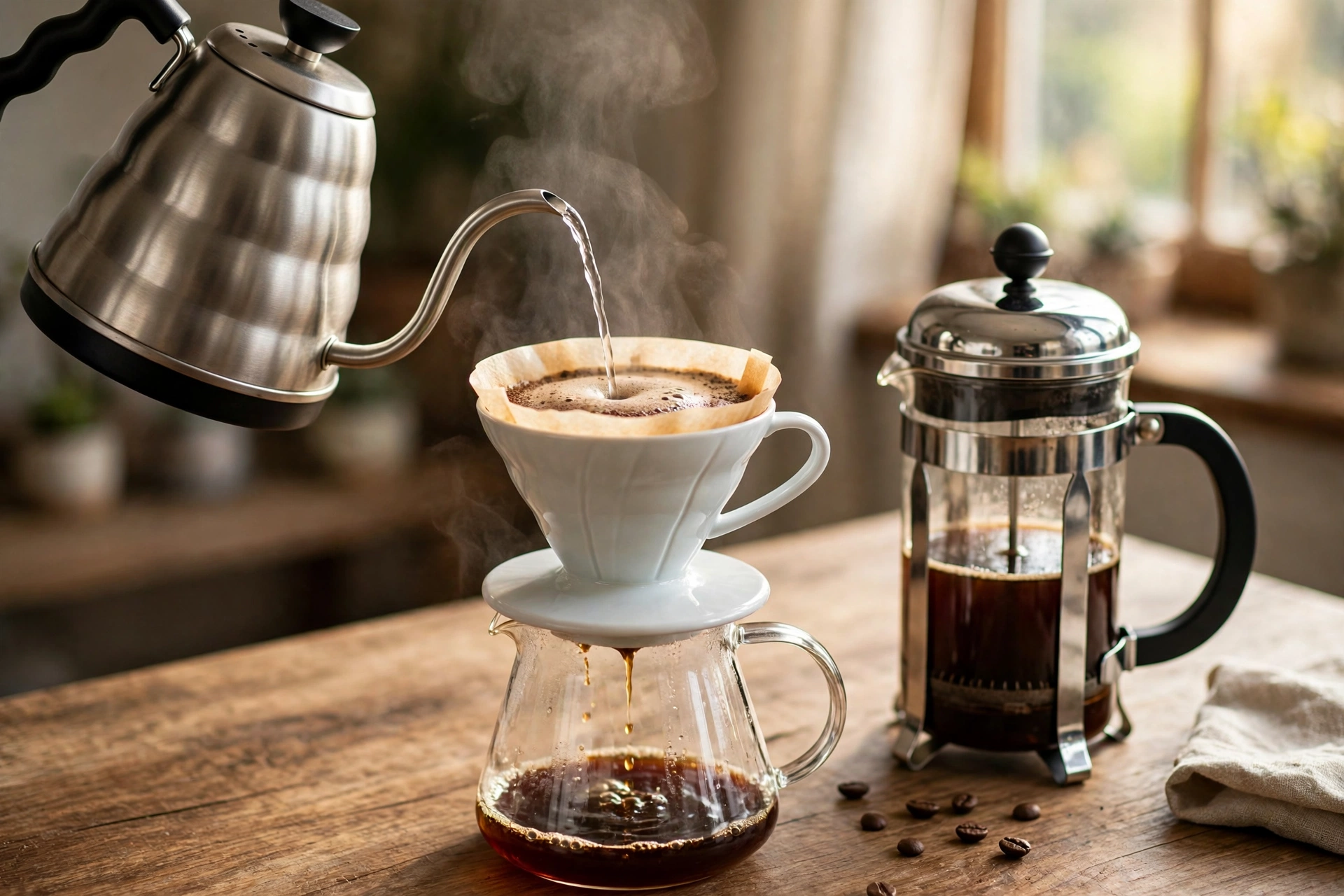
Storing beans in Indian heat and humidity: keep the bag airtight, dark and cool — a sealed jar in a cupboard, never on the kitchen counter in sunlight and never in the fridge door, where condensation is the enemy. In monsoon humidity, do not leave the bag open between brews: scoop what you need and seal it again. If you buy 500 g or more, freeze half in a sealed bag on day one and thaw only what you will use that week; frozen beans keep three to four months. And one Indian exception to the humidity rule: Monsoon Malabar coffee is intentionally humidity-aged, which softens acidity and boosts body — if you love a heavy, low-acid cup, it is worth trying, though no Monsoon Malabar made this guide’s top six. For brewing ratios, start filter brewing at 1:16 coffee to water by weight — 15 g of coffee to 240 g of water for one cup — and tighten from there; the SCA Golden Cup standard centres on 1:18 (55 g per litre).
Arabica or Robusta — which should you buy?
Arabica makes up roughly 60–70% of world coffee production, Robusta roughly 30–40%, and the difference that matters in your cup is caffeine and character. By dry weight, Robusta runs 2.2% to 2.7% caffeine against Arabica’s 1.2% to 1.5% — roughly double — and that extra caffeine is why Robusta tastes stronger, more bitter, and gives espresso more crema. Arabica has roughly half the caffeine, more sugar and more lipids, and grows at high altitude; Robusta has more caffeine and chlorogenic acid, resists disease, yields more, and grows low and hot.
For home brewing in India, the rule is simple: buy Arabica if you drink your coffee black (smoother, more aromatic, more flavour to taste) and buy a blend with Robusta — or a dark-medium Arabica with real body — if you drink it milky or as espresso (stronger, more crema, does not go thin under milk). Every bag in this guide is 100% Arabica, which is a deliberate choice: the top six are all origin coffees, and none is a blend. If you want Robusta in the cup — for a stronger filter coffee or a cheaper daily espresso — the disclosed 70/30 blend in our budget beans guide is the one to compare against, and our French press vs moka pot guide shows which brewer gets the most out of each bean type. A fuller treatment of the two species is planned as its own article; here, the short version is enough to choose.
Coffee beans rate in India — what a 250 g bag should cost
If you search “coffee beans rate in India” you will mostly find wholesale and mandi prices — bulk rates for traders, quoted per quintal, that have nothing to do with a 250 g retail bag. This guide prices retail packs only, and on that scale the honest range is wide: per kilo, the six bags here run from ₹900 (Siruvani) to ₹3,760 (Araku), with the four middle bags between ₹1,800 and ₹2,800. That is the retail band for named Indian single origins in 250–500 g packs. Below ₹900 a kilo you are buying a blend or a commodity bag — fine for a daily milky cup, and exactly what the budget guide covers — and above ₹3,800 a kilo you are paying for organic certification, a roast date on the pack, or a named farm, not for more caffeine. We quote no mandi figure in this guide because no wholesale rate was verified with a verbatim source line on the day of writing.
Who should NOT buy whole beans
- You drink instant coffee and are happy with it: whole beans demand a grinder, a brewer and five minutes a morning. If that is not a trade you want, the money is better spent on better instant — filter coffee powder is the middle step.
- You have no grinder and no plan to buy one: ground coffee goes stale in 1–2 weeks once opened. Buy a ground variant (Toffee, Sleepy Owl) or buy the grinder first — our grinder guide under ₹3,000 starts at the cheapest honest option.
- You drink one cup a week: a 250 g bag is 16 cups. At one cup a week it will be stale long before it is empty. Buy the smallest bag you can find, or a 100 g pouch.
- You only drink very dark, very milky coffee: the medium roasts that win this guide will taste thin and sour to you. Look for a dark roast or a robusta blend instead — the budget guide’s top pick is built exactly for that cup.
- You are buying a kilo with no roast date on the bag: a kilo of beans with no roast date is a gamble, not a bargain. Buy 250 g, check the date, and reorder.
Frequently asked questions
Which coffee beans are best in India for home brewing?
Blue Tokai Attikan Estate is the best overall buy — a dark-medium single origin that brews well in espresso, moka pot, French press, pour-over and South Indian filter, at ₹651 for 250 g on Amazon (checked 23 November 2026). Siruvani is the best value at ₹13.50 a cup, and Sleepy Owl Original at ₹599 is the best first specialty bag.
Which coffee bean brand is best in India?
There is no single best brand — the best brand depends on your brewer. Blue Tokai is the best-known specialty roaster in India (founded 2013, working with 80+ farms) and the most versatile; Third Wave is the best pick for black-coffee drinkers; Araku is the most traceable, certified-organic option; Sleepy Owl is the friendliest first bag; and Siruvani and Toffee are the best value buys. Pick by brewer and milk habit, not by brand name.
Whole bean or ground — which should I buy?
Whole bean if you own a grinder: it stays fresh far longer, and whole beans ground at home right before brewing will always beat pre-ground coffee of the same origin. Ground if you do not — but order the grind for your brewer and finish a ground bag within 2–3 weeks. In this guide, Toffee Baba Budangiri and Sleepy Owl Original both sell named grinds; the other four are whole bean.
How many cups does a 250 g bag of coffee beans make?
About 16 cups at a 15 g dose — roughly two weeks at one cup a day — or about 13 double espresso shots at an 18 g dose. A 500 g bag makes about 33 cups. A double shot takes 18–20 g, so a kilo is about fifty doubles.
How should I store coffee beans in Indian weather?
Airtight, dark and cool — a sealed jar in a cupboard, never on a sunny counter and never in the fridge door, where condensation gets in. In monsoon humidity, seal the bag after every scoop. Opened whole beans keep one to three weeks at room temperature; frozen whole beans keep three to four months, so freeze half of a 500 g bag on day one.
Why does the same coffee cost different prices for different grinds?
Some sellers price each grind variant separately on the same listing, and the price you see is for one variant only. Toffee Baba Budangiri is the example in this guide: the French Press grind is ₹450, while other grinds on the same listing are ₹405 and ₹427.50 — and owners have called the pricing erratic. Always pick your grind first, then read the price for that grind.
Sources
- World Coffee Index — Arabica vs Robusta caffeine and character (2.2–2.7% vs 1.2–1.5%)
- BROOT — best coffee beans in India guide; freshness window (7–30 days off roast) and whole-bean freshness
- National Coffee Association (via Daily Brewer) — opened whole beans keep 1–3 weeks; ground 1–2 weeks
- RoastRanker — 1:16 filter brew ratio; SCA Golden Cup standard 1:18 (55 g per litre)
- 1ReviewHub — double shot 18–20 g; 250 g ≈ 13 doubles; Cothas heritage
- TasteAtlas — Blue Tokai founded 2013; Attikan Estate among its most popular coffees
- Restaurant India — Blue Tokai works with 80+ farms; Araku’s SAMTFMACS cooperative backs 11,000+ farmers
- CoffeeScan — Monsoon Malabar humidity-ageing
- Indian Coffee Beans — Chikmagalur growing altitude 700–1,500 m
- Coffee Wiki — Arabica ≈ 60–70% of world production, Robusta ≈ 30–40%
- Blue Tokai — Attikan Estate product page (Biligiriranga Hills, dark medium roast, tasting notes)
- Araku Coffee — Grand Reserve product page (certified organic, Fair Trade, terroir 3,307–3,908 ft, roast date on pack)
- Third Wave Coffee — Chikmagalur Region product page (hand-picked, sun-dried, stone fruit and raisins)
- Amazon.in — prices and ratings for Attikan, Siruvani and Toffee, checked 23 November 2026
- Kaapi Craft price tracker — Sleepy Owl Original tracked price, lowest ₹599 since 15 October 2026
For the full budget shortlist under ₹500, read our best coffee beans under ₹500 in India guide; for estate-level single origins, our best single-origin Indian coffee beans guide. If you are starting from cold brew, our cold brew guide shows the method, and our South Indian filter coffee maker guide covers the dabara set for filter coffee.
Every price and rating in this guide was checked on 23 November 2026, on the product page or brand store named in each card. Sleepy Owl Original’s price is tracked live by our price tracker. Prices change — the price at checkout is what counts. We may earn a small fee if you buy through these links, at no extra cost to you. For live deals across all coffee gear, see our deals page.