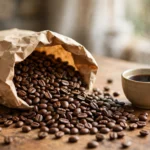
If you have ever stood in front of a kirana shelf wondering about Nescafe vs Bru, here is the short answer: there is no single winner — the right jar depends on how you drink your coffee. Bru Gold is the best value for black coffee at ₹5.38 a cup. Nescafé Classic is the best jar for cold and beaten coffee. And if your cup is mostly hot milk, Bru Instant or Nescafé Sunrise will do the job for under ₹5 a cup. Every price below is tracked live from Flipkart (first checked 11 November 2026), and the per-cup and monthly cost of each jar is worked out from the live price, so these numbers never go stale — you can pick one and stop wondering.
One honest note first: all five jars cost more today than on our last check on 7 November 2026. We show the movement for each jar, because a “best value” verdict means nothing on a stale price.
Last verified: 11 November 2026.
QUICK ANSWER — Health: neither brand is meaningfully healthier plain and unsweetened; sugar, milk and total caffeine matter more. EFSA puts the healthy-adult caffeine limit at 400 mg/day. Gold vs Gold: Bru Gold wins for value — both freeze-dried 100% coffee, similarly smooth, but Bru’s 500 g pouch beats Nescafé Gold Blend’s 100 g jar.
Nescafe vs Bru: the short answer
- Best for black coffee: Bru Gold 500 g — ₹5.38 a cup, ₹323 a month at two cups a day
- Best for cold and beaten (dalgona) coffee: Nescafé Classic 200 g — ₹10.39 a cup
- Best budget milky cup: Bru Instant 200 g — ₹4.53 a cup
- Cheapest cup overall: Nescafé Sunrise 400 g — ₹3.71 a cup, ₹223 a month
- Skip unless you drink one careful cup a day: Nescafé Gold Blend 100 g — ₹15.10 a cup
If you only buy one jar and drink your coffee with milk, buy Bru Instant. If you drink it black, buy Bru Gold. If you make cold or beaten coffee most days, buy Classic. For the wider shelf, see our Best Instant Coffee in India (2026).
Nescafe vs Bru comparison table
| Product | What’s inside | Pack | Price (11 Nov 2026) | Per cup (2 g) | Monthly (2 cups/day) | Best for | Verdict |
|---|---|---|---|---|---|---|---|
| Bru Gold | 100% coffee, freeze-dried | 500 g pouch | ₹1,344 | ₹5.38 | ₹323 | Daily black coffee | Buy — best value premium jar |
| Nescafé Classic | 100% Robusta, spray-dried | 200 g jar | ₹1,039 | ₹10.39 | ₹623 | Cold / beaten coffee | Buy — if you make cold coffee |
| Bru Instant | 70% coffee / 30% chicory | 200 g pouch | ₹453 | ₹4.53 | ₹272 | Milky South-Indian-style cups | Buy — cheapest proper milky cup |
| Nescafé Gold Blend | 100% coffee, freeze-dried | 100 g jar | ₹755 | ₹15.10 | ₹906 | One careful black cup a day | Skip — Bru Gold is smoother per rupee |
| Nescafé Sunrise | Coffee-chicory blend | 2 × 200 g (400 g) | ₹742 | ₹3.71 | ₹223 | Big families / offices | Buy — cheapest cup here |
Per-cup cost uses a 2 g serving. Prices are tracked live from Flipkart (first checked 11 November 2026) and the per-cup and monthly figures update with them; the price at checkout is what counts.
The two brands in 60 seconds
Nescafé is the older brand by three decades. Nestlé launched it in Switzerland on 1 April 1938 — the world’s first instant coffee, created to use up a surplus of Brazilian beans. Within two years it was selling in 30 countries, and in India it became the default jar: the one in kiranas, college canteens and office pantries.
Bru is the home-grown challenger. It launched in 1969 under the Brooke Bond banner — Hindustan Unilever’s own company history lists “Bru coffee launched” in 1969, though some sources say 1968 — as India’s first coffee-chicory instant coffee, built for the Indian palate. The chicory adds the body and gentle sweetness of South Indian filter coffee to a jar you only need to stir. Bru is owned by Hindustan Unilever today and remains strongest in the South.
That history explains the whole comparison. Nescafé sells pure coffee — bold, slightly bitter, consistent anywhere in the world. Bru sells the Indian cup — softer, fuller, cheaper per spoon because a third of the jar is chicory, not coffee.
Nescafe’s range in India
Nescafé Classic 200 g
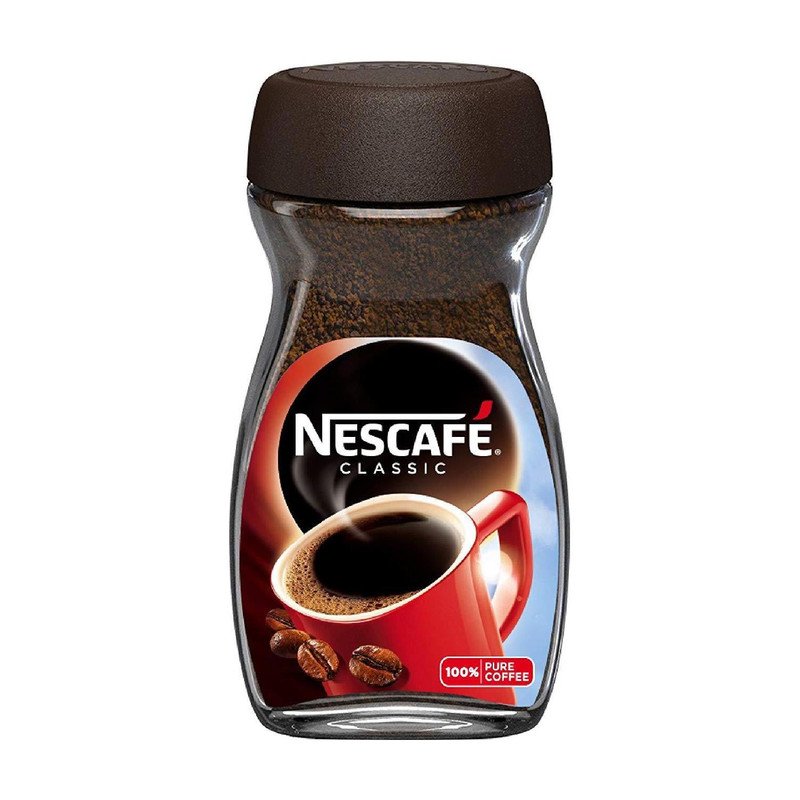
Price: ₹1,039 on Flipkart — check the latest price on Flipkart. Rated 4.2★ on Flipkart (1,639 ratings). Price movement: up ₹135 from ₹948 on 7 November 2026.
Classic is 100% Robusta, medium-dark roast, no chicory — the boldest jar here and the strongest kick per spoon (about 63 mg of caffeine in a 2 g serving, by our estimate from USDA data). Black, it is bitter and sharp; that is exactly why it survives milk, sugar and ice, and why it is the best jar here for beaten (dalgona) and cold coffee. The price is the problem: at ₹10.39 a cup it costs more than twice Bru Instant for a milky cup, and it jumped ₹135 in four days. One caution: a single-seller listing priced the 100 g jar near ₹978 last week — more than the 200 g jar. If you see that, buy the 200 g jar instead.
Pros: 100% coffee, no chicory; best jar for beaten and cold coffee; strongest caffeine kick (~63 mg per 2 g, estimated).
Cons: ₹10.39 a cup — more than double Bru Instant for a milky cup; price rose ₹135 in four days; too bitter black for most drinkers.
Best for: Cold coffee and beaten coffee makers. Verdict: Buy it for cold and beaten coffee. For a daily milky cup, Bru Instant does the job for less than half the price.
Nescafé Gold Blend 100 g
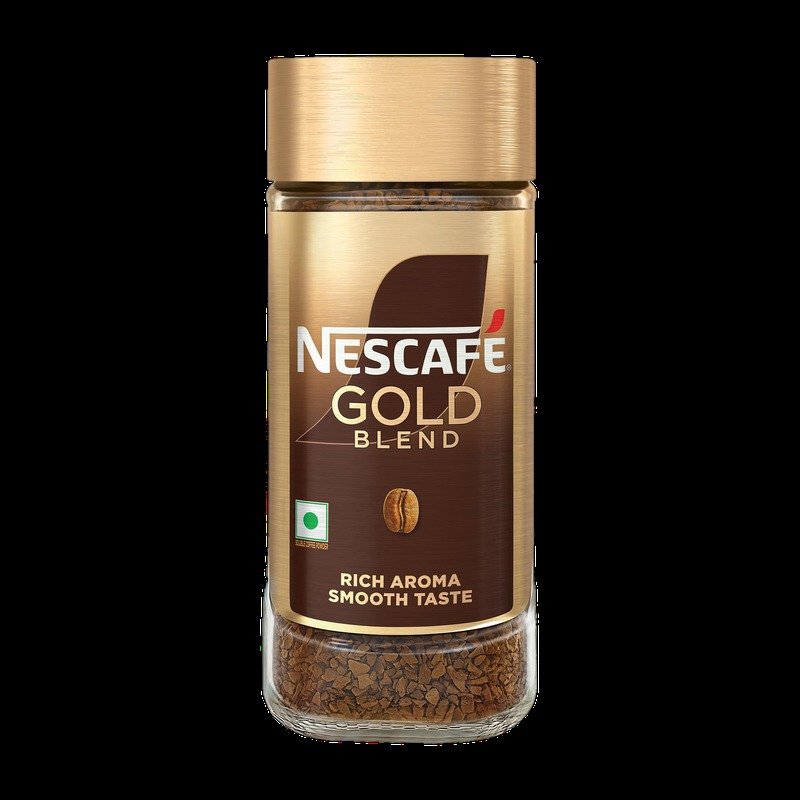
Price: ₹755 on Flipkart — check the latest price on Flipkart. Rated 4.3★ on Flipkart (35 ratings — a thin pool, treat the score as a hint). Price movement: up ₹31 from ₹795 on 7 November 2026.
Gold Blend is Classic’s smoother sibling. Both are 100% coffee, but Gold is freeze-dried — frozen first, water removed gently — while Classic is spray-dried at high heat. The result is a softer, rounder cup with less of Classic’s bitter edge. Black, it is genuinely pleasant. The catch is the price: at ₹15.10 a cup it costs nearly three times Bru Gold for a very similar freeze-dried experience, and two cups a day is ₹906 a month. It only makes sense if you drink exactly one careful black cup a day and specifically want the Nescafé name on the jar.
Pros: Freeze-dried and smooth — the best-tasting Nescafé jar black; 100% coffee, no chicory.
Cons: ₹15.10 a cup — nearly 3× Bru Gold for the same freeze-dried smoothness; ₹906 a month at two cups a day.
Best for: One careful black cup a day. Verdict: Skip it. Bru Gold gives you the same freeze-dried smoothness for ₹5.38 a cup.
Nescafé Sunrise 2 × 200 g

Price: ₹742 on Flipkart — check the latest price on Flipkart. Rated 4.3★ on Flipkart (363 ratings). Price movement: up ₹27 from ₹641 on 7 November 2026.
Sunrise is the cheapest cup in this comparison — ₹3.71 — and the reason is the format, not a trick: two 200 g pouches, 400 g in total, at ₹185.50 per 100 g, about a third of Classic’s per-gram price. It is a coffee-chicory blend, so expect a mild, smooth, milky-friendly cup built for the family pot. Two cups a day costs about ₹223 a month, against ₹323 with Bru Gold and ₹623 with Classic. The trade-off is flavour: black, Sunrise tastes thin, and its caffeine per spoon is lower than Classic’s because chicory carries no caffeine. But with milk and sugar — how most Indian homes drink it — it does the job at a price nothing else here touches.
Pros: Cheapest cup here — ₹3.71, ₹223 a month; 400 g catering pack suits big families and offices; smooth, mild, milky-friendly.
Cons: Thin and weak black — a milk-coffee jar only; lower caffeine per spoon than the 100% coffee jars.
Best for: Big families and offices where the pot never stops. Verdict: Buy it if your household drinks milky coffee by the pot — the cheapest honest cup in this comparison.
Bru’s range in India
Bru Gold 500 g
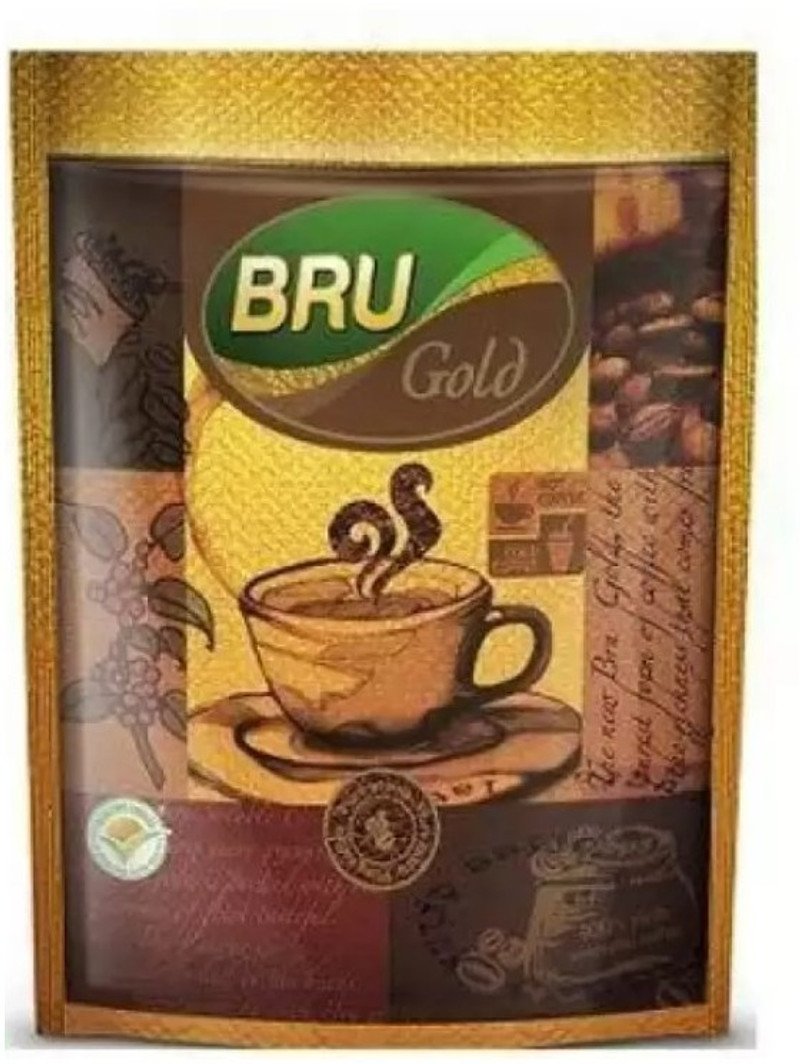
Price: ₹1,344 on Flipkart — check the latest price on Flipkart. Rated 4.6★ on Flipkart (438 ratings). Price movement: up ₹72 from ₹1,446 on 7 November 2026. Note: Flipkart shows several sellers for this pouch — we saw ₹1,473 to ₹1,518 today, so check the seller before you pay.
Bru Gold is the best jar in this comparison, and the maths is not close. Freeze-dried, 100% coffee (Arabica and Robusta), it dissolves cleanly and tastes smoother than Bru Instant or Classic black — and at ₹5.38 a cup it undercuts Classic and costs a fraction of Gold Blend. Two cups a day is about ₹323 a month. Two honest flags: the price moved ₹1,345 → ₹1,446 → ₹1,518 across our last two checks, so confirm the checkout price; and it is a pouch, not a jar, so decant it into an airtight container once opened or the last quarter will taste flat.
Pros: Best value premium jar — freeze-dried, 100% coffee, ₹5.38 a cup; smooth, rich black coffee with real aroma; cheapest 100% coffee per gram here (₹268.80 per 100 g).
Cons: Price keeps drifting — ₹1,345 → ₹1,446 → ₹1,518 in under a month; pouch needs an airtight container once opened.
Best for: Daily black-coffee drinkers who want premium taste at a budget per-cup cost. Verdict: The best all-rounder here. If you buy one jar, buy this one.
Bru Instant 200 g
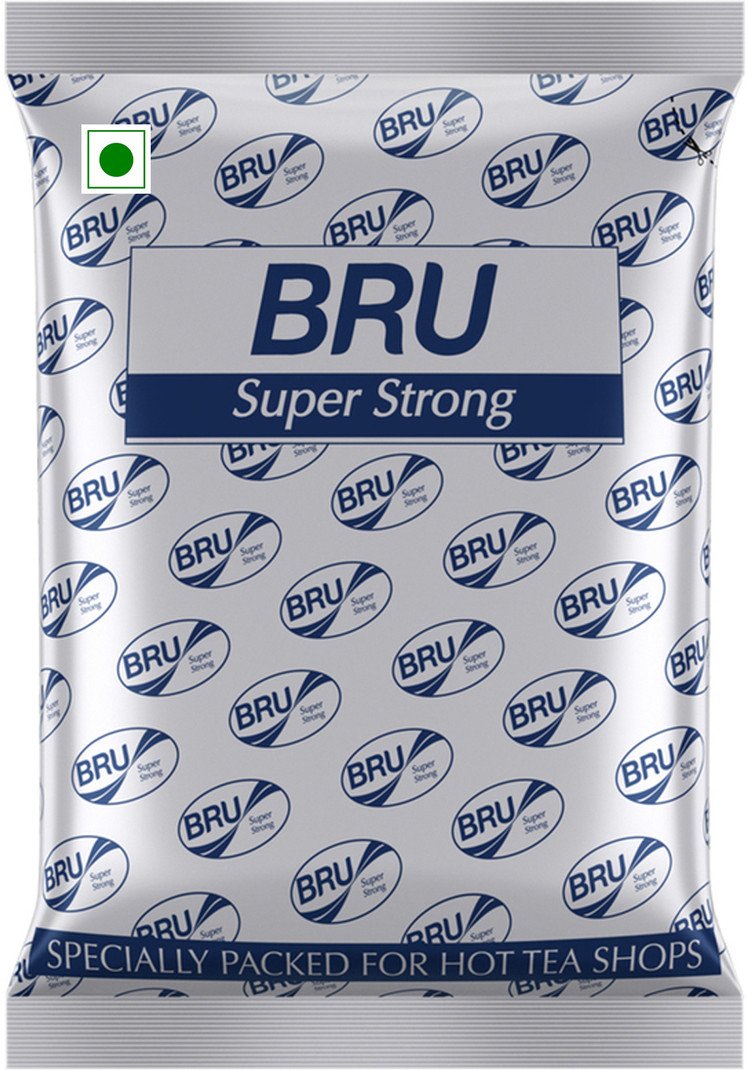
Price: ₹453 on Flipkart — check the latest price on Flipkart. Rated 4.4★ on Flipkart (17 ratings — a thin pool, treat the score as a hint). Price movement: up ₹59 from ₹414 on 7 November 2026.
Bru Instant has been India’s morning cup since 1969: 70% coffee and 30% chicory, a Robusta-Arabica blend. The chicory is the point, not a flaw — it adds body, a gentle sweetness and the thick, frothy texture that makes a milky cup feel like the filter coffee many Indian homes grew up on. At ₹4.53 a cup it is one of the cheapest jars here, and at ₹272 a month for two cups a day it is the cheapest way to get a proper milky cup. Do not buy it for black coffee: without milk the chicory turns flat and woody, and at ~44 mg of caffeine per 2 g serving it is the weakest kick here.
Pros: Best milky cup for the money — ₹4.53 a cup, ₹272 a month; chicory gives body and froth pure-coffee jars do not.
Cons: Flat and woody black — milk is not optional; lowest caffeine here (~44 mg per 2 g, estimated); only 17 ratings behind its 4.4★.
Best for: The daily milky morning cup. Verdict: Buy it if your coffee is mostly milk. For black coffee, spend a little extra per cup and buy Bru Gold instead.
Taste by cup: milk, black, cold and beaten
With hot milk: Bru Instant wins on value and Sunrise wins on price — both are built for milk, and the chicory gives a full body pure coffee cannot match at this price. Classic is stronger and bolder with milk, but costs more than twice as much per cup.
Black: Bru Gold is the clear winner — smooth, aromatic, ₹5.38 a cup. Gold Blend is close on taste but costs ₹15.10 a cup. Classic is too bitter black for most drinkers, Bru Instant turns flat and woody, and Sunrise tastes thin.
Cold and beaten (dalgona) coffee: Classic wins. Its bitter Robusta edge is what survives ice, cold milk and all that beating — the chicory jars go soft and the smooth jars go quiet.
Caffeine: Nescafe vs Bru
One caveat before the numbers: these are estimates, not lab tests of these jars. USDA lab data puts regular instant coffee at 3,142 mg of caffeine per 100 g — about 63 mg in a standard 2 g serving — and Robusta beans carry roughly twice the caffeine of Arabica. Chicory carries no caffeine at all, so a jar that is 30% chicory holds 30% less caffeine per spoon.
| Jar | Coffee in the jar | Caffeine per 2 g serving (estimated) | What it means |
|---|---|---|---|
| Nescafé Classic | 100% Robusta | ~63 mg | Strongest kick here |
| Nescafé Gold Blend | 100% coffee (Arabica-Robusta) | ~60 mg | Nearly as strong, smoother |
| Bru Gold | 100% coffee (Arabica-Robusta) | ~60 mg | Nearly as strong, smoother |
| Bru Instant | 70% coffee / 30% chicory | ~44 mg | Gentler — good if caffeine makes you jittery |
| Nescafé Sunrise | Coffee-chicory blend | Lower than Classic (exact blend not published) | Gentlest cup here |
Caffeine figures are estimates from USDA data for instant coffee, not lab tests of these jars.
The practical takeaway: if you want the strongest morning cup, Classic’s 100% Robusta wins. If caffeine makes you jittery or you drink three or four cups a day, Bru Instant’s ~44 mg is the kinder choice — and the cheaper one.
How to decide: Nescafe vs Bru
Run through this checklist in order — the first question that points clearly one way is usually your answer:
- How do you drink it? Black → Bru Gold. Mostly milk → Bru Instant or Sunrise. Cold or beaten → Classic. All three ways → Bru Gold is the best single-jar compromise.
- How many cups a day? One → any jar works, including Gold Blend. Two or more → avoid Gold Blend (₹906 a month); Bru Gold (₹323) or Bru Instant (₹272) keep the month affordable.
- What is your monthly budget? ₹223 → Sunrise. ₹272 → Bru Instant. ₹323 → Bru Gold. ₹623 → Classic. ₹906 → Gold Blend. The gap between the cheapest and priciest cup here is more than 4×.
- Does chicory bother you? If you want pure coffee only, your options are Classic, Gold Blend and Bru Gold. If you grew up on filter coffee, the chicory in Bru Instant and Sunrise is a feature, not a flaw.
- How strong do you want it? Strongest kick → Classic (~63 mg). Gentlest → Bru Instant (~44 mg) or Sunrise.
- How big is the household? One or two drinkers → a 100–200 g jar. A full family or an office → Sunrise’s 400 g catering pack or Bru Gold’s 500 g pouch, the cheapest per gram.
And one honest exit: if this comparison makes you want real beans instead of instant, that is a fair conclusion — but it is a different purchase. Our Best Filter Coffee Powder in India guide covers the roast-and-ground route, starting at ₹169 for 200 g.
Verdict
Buy Bru Gold if you drink black coffee — at ₹5.38 a cup it is the best-tasting and best-value 100% coffee jar here, and the only premium jar that stays affordable at two cups a day. Buy Bru Instant if your cup is mostly milk — at ₹4.53 a cup it is the cheapest proper milky cup here. Buy Classic if you make cold or beaten coffee — nothing else holds up to ice the way its bitter Robusta does; just buy the 200 g jar, not the overpriced 100 g listing. Buy Sunrise if the whole family drinks milky coffee — ₹3.71 a cup and ₹223 a month is the cheapest honest cup in this comparison. Skip Gold Blend unless you drink exactly one black cup a day and specifically want Nescafé Gold — Bru Gold gives you the same freeze-dried smoothness for a third of the price.
Brand loyalty aside, the score is a draw with a clear split: Bru wins on value in every use case, Nescafé wins on the cold-coffee jar and on the strongest kick. Pick by your cup, not by the label — and check the price on the day you buy, because all five jars rose in the four days before this article was written.
Frequently Asked Questions
Which is better, Nescafe or Bru?
It depends on how you drink your coffee. For black coffee, Bru Gold is better — smoother and ₹5.38 a cup against Classic’s ₹10.39. For cold and beaten coffee, Nescafé Classic is better. For a daily milky cup, Bru Instant is better value at ₹4.53 a cup.
Which is better for black coffee, Bru Gold or Nescafe Gold?
Bru Gold. Both are freeze-dried 100% coffee and taste similarly smooth black, but Bru Gold costs ₹5.38 a cup (500 g pouch at ₹1,344) against Nescafé Gold Blend’s ₹15.10 a cup (100 g jar at ₹755).
Bru Instant vs Nescafe Classic — which is better?
For a milky cup, Bru Instant: its 30% chicory gives body and froth, and it costs ₹4.53 a cup against Classic’s ₹10.39. For black or cold coffee, Classic: it is 100% Robusta with no chicory, so it stays bold where Bru Instant goes flat.
Is Bru coffee good for health?
Neither Bru nor Nescafé is a health drink — both are instant coffee, and the health question is mostly about how much caffeine and sugar you take. Bru Instant has less caffeine per spoon (about 44 mg per 2 g serving, estimated) than Classic (about 63 mg), because 30% of the jar is chicory. For specific health conditions, ask your doctor rather than a coffee blog.
Nescafe vs Bru — which has more caffeine?
Nescafé Classic has the most caffeine here — about 63 mg in a standard 2 g serving, because it is 100% Robusta, and Robusta carries roughly twice the caffeine of Arabica. Bru Gold and Gold Blend are close behind at about 60 mg. Bru Instant has the least of the named jars at about 44 mg, because 30% of it is chicory. These are estimates from USDA data, not lab tests of these jars.
Why is Nescafe Classic more expensive than Bru Instant?
Because Classic is 100% coffee and Bru Instant is 70% coffee and 30% chicory. Chicory costs less than coffee: Classic is ₹519.50 per 100 g (₹10.39 a cup) against Bru Instant’s ₹226.50 per 100 g (₹4.53 a cup).
Is Bru Instant good for South Indian filter coffee?
No — Bru Instant is instant coffee; it dissolves in hot water and never goes through a filter. For South Indian filter coffee you need roast-and-ground powder, such as Bru Roast & Ground or one of the powders in our Best Filter Coffee Powder in India guide.
Bru or Nescafe: which is better for health?
For the plain instant coffees compared here, neither brand is meaningfully healthier. What you add — sugar and milk — and your total caffeine matter more. EFSA says caffeine intakes up to 400 mg/day do not raise safety concerns for healthy adults (single doses up to 200 mg); this is general information, not medical advice.
Bru Gold or Nescafe Gold: which is better?
Bru Gold is the better buy for most people. Both Bru Gold and Nescafé Gold Blend are freeze-dried 100% coffee and taste similarly smooth black, but Bru Gold costs ₹5.38 a cup against Nescafé Gold Blend’s ₹15.10 a cup.
Prices in this article were checked on 11 November 2026 on Flipkart. Prices and availability change frequently — the price you see at checkout is what counts. Caffeine figures are estimates from USDA data for instant coffee, not lab tests of these jars.
About the author
Kaapi Craft Editorial — Coffee recommendations at Kaapi Craft are researched by our editorial team. We compare specifications from manufacturer product pages, verify street prices across Amazon.in, Flipkart and official brand stores in India, and check ratings before recommending anything. Prices are re-checked before major sales. Our picks are never paid placements.