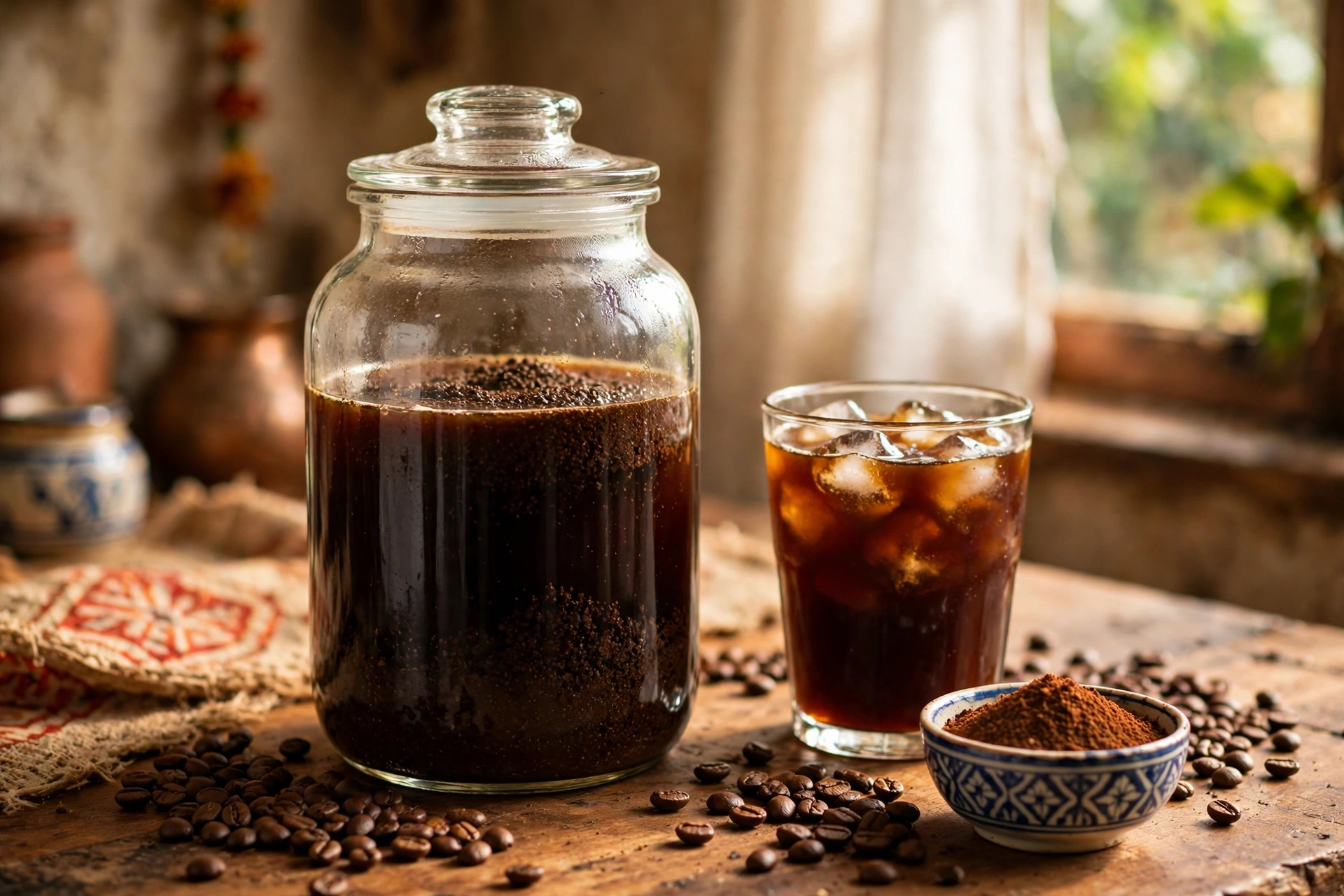
Learning how to make cold brew coffee at home in India comes down to four things: coarse-ground coffee, cold water, a clean jar, and 12–18 hours in the fridge. No machine, no special gear, no boiling water — a glass jar and a muslin cloth do the whole job. This guide gives you the exact ratios in grams and cups, the three methods (jar, French press, dedicated maker), steep times for Indian kitchens, what a glass actually costs, and how to fix the five ways it goes wrong.
At a glance — Cold brew is coffee steeped in cold water for 12–18 hours, never brewed hot. Use a 1:5 coffee-to-water ratio for concentrate (dilute 1:1) or 1:8 for ready-to-drink. Grind coarse, like sea salt — fine powder makes it bitter and cloudy. Always steep in the fridge when your kitchen is above 25°C. A home glass costs about ₹56 in coffee, against ₹395 for a café cold brew.
What Is Cold Brew Coffee — and How Is It Different from Iced Coffee?
Cold brew is coffee made by soaking coarse-ground coffee in cold or room-temperature water for 12–24 hours, then straining out the grounds. No hot water touches the coffee at any stage. The slow, cold extraction pulls out the smooth, sweet, chocolatey compounds and leaves behind much of the sharp, bitter edge that hot water extracts in minutes — which is why cold brew tastes mellow even when it is strong.
Iced coffee is a different drink: hot coffee brewed the normal way, then cooled and poured over ice. It keeps the brightness and bite of hot coffee, and it dilutes as the ice melts. Cold brew is smoother, naturally a little sweeter, and made in a batch that keeps in the fridge for a week. If you like your coffee black and smooth, cold brew is the better method; if you like bright, acidic coffee, stick with iced coffee. Our Best Cold Brew Coffee Maker in India guide compares the dedicated makers if you decide to buy one — but you do not need one to start.
One honest correction to a claim you will read everywhere: cold brew is often sold as “much less acidic” than hot coffee. The measured pH of cold brew (4.85–5.13, in a peer-reviewed 2018 study by Rao & Fuller) is about the same as hot brew. What changes is the taste — fewer bitter compounds, not a big acidity difference. Buy cold brew for the smoothness, not for an acidity cure.
Pick Your Method and Strength Before You Start
Cold brew has two decisions, and both come before you touch a bean: which method, and how strong. The method depends on what you already own; the strength depends on how you drink it. Get these two right and the rest is waiting.
| Method | What you need | Best for | Cleanup | Verdict |
|---|---|---|---|---|
| Mason jar + muslin cloth | A 1-litre glass jar, a sieve, a muslin cloth | First-timers; anyone who brews once or twice a week | Most work — strain twice, wash the cloth | Start here. ₹0 extra gear, same quality as a maker. |
| French press | A French press you already own | People who own a press; single glasses | Easiest — plunge and pour | Best if you own one. Built-in filter, no extra straining. |
| Dedicated cold brew maker | A maker with a built-in filter basket (₹1,299–₹1,839) | Brewing 3+ times a week; big batches for a family | Easy — lift the basket out | Buy only if the habit sticks. Convenience, not better coffee. |
Decision checklist — answer these four before you brew: (1) How many glasses a week? One or two — use the jar. Daily — a maker earns its keep. (2) Black or with milk? Milk drinks want concentrate (1:5); black over ice wants ready-to-drink (1:8). (3) How many people? One person — a 1-litre batch lasts the week. A family — brew the 1:5 concentrate and dilute per glass. (4) What do you already own? A French press or a big jar beats any purchase — the coffee does not know what container it steeped in.
The Ratios: One Table for Every Strength
Recipes online disagree about the ratio — 1:4, 1:5, 1:8, 1:12 — and the disagreement is not a mistake. They are different strengths for different serves. A concentrate is brewed strong and diluted in the glass; a ready-to-drink brew is poured as-is. This table settles it in one place. All ratios are coffee : water by weight, checked against five published guides on 16 November 2026.
| Strength | Ratio (coffee : water) | For a 1-litre batch | Steep | How to serve | Yield |
|---|---|---|---|---|---|
| Concentrate | 1 : 5 | 100 g coffee : 500 ml water | 16–18 h in the fridge | Dilute 1:1 with water or milk | ~300 ml concentrate → ~600 ml diluted, 2–3 glasses |
| Ready-to-drink | 1 : 8 | 100 g coffee : 800 ml water | 12–18 h in the fridge | Pour straight over ice | ~600 ml → ~1.2 litres diluted, about 5 glasses |
| Light, single glass | 1 : 12 | 20 g coffee : 240 ml water | 12–16 h in the fridge | Pour straight over ice | ~200 ml, one glass |
Two notes on the table. First, the grounds drink up roughly 200 ml of water per 100 g of coffee — about twice their weight — so a 1-litre batch never yields a full litre of concentrate; the yields above already account for that. Second, if you have no kitchen scale, use volume: one heaped cup of coarse grounds to three cups of water gets you close to the 1:8 ready-to-drink ratio. Weighing is more reliable, but volume works for a first batch.
What You Need to Make Cold Brew at Home
Equipment (jar method): a clean 1-litre glass jar or jug with a lid; a fine-mesh sieve; a muslin cloth, clean cotton cloth, or paper coffee filter; a spoon; a bottle or jug to store the finished brew.
Ingredients (one 1-litre batch, ready-to-drink): 100 g of coarse-ground coffee; 800 ml of cold, filtered water. That is all — no sugar, no milk in the brew; those go in when you serve it.
The coffee matters more than the gear. Use fresh beans, medium to dark roast — they suit cold water best, because cold extraction favours chocolate, caramel and nut notes and mutes the delicate florals of a light roast. Buy beans and ask the shop to grind them coarse for cold brew, or grind them yourself: our Best Coffee Grinder Under ₹3000 in India guide covers the budget grinders that do a proper coarse grind. Two Indian options verified today (16 November 2026): Blue Tokai Cold Brew Blend Bold, 250 g for ₹700 on bluetokaicoffee.com, and Sleepy Owl Cold Brew Packs, ₹699 for 5 packs on sleepyowl.co — the packs skip the grinding and filtering entirely, since each pack is a pre-measured steeping bag. Do not use instant coffee: it is already brewed and dried, so steeping it in cold water just makes iced instant coffee, a different drink. And do not use South Indian filter coffee powder: it is ground fine, like sand, for the steel filter — in cold brew it over-extracts, turns bitter, and slips through every sieve. If filter powder is all you have, save it for kaapi — our How to Make South Indian Filter Coffee at Home guide is the right recipe for it.
Water: filtered water if your tap water tastes of chlorine or minerals — a 16-hour steep gives off-flavours plenty of time to show up. If your tap water tastes fine to drink on its own, it will work fine here too.
How to Make Cold Brew Coffee at Home in India: Step by Step
The method is the same for all three vessels — only the filtering changes. Total hands-on time is about 5 minutes; the waiting is 12–18 hours.
Method 1: The Mason Jar Method (No Gear)
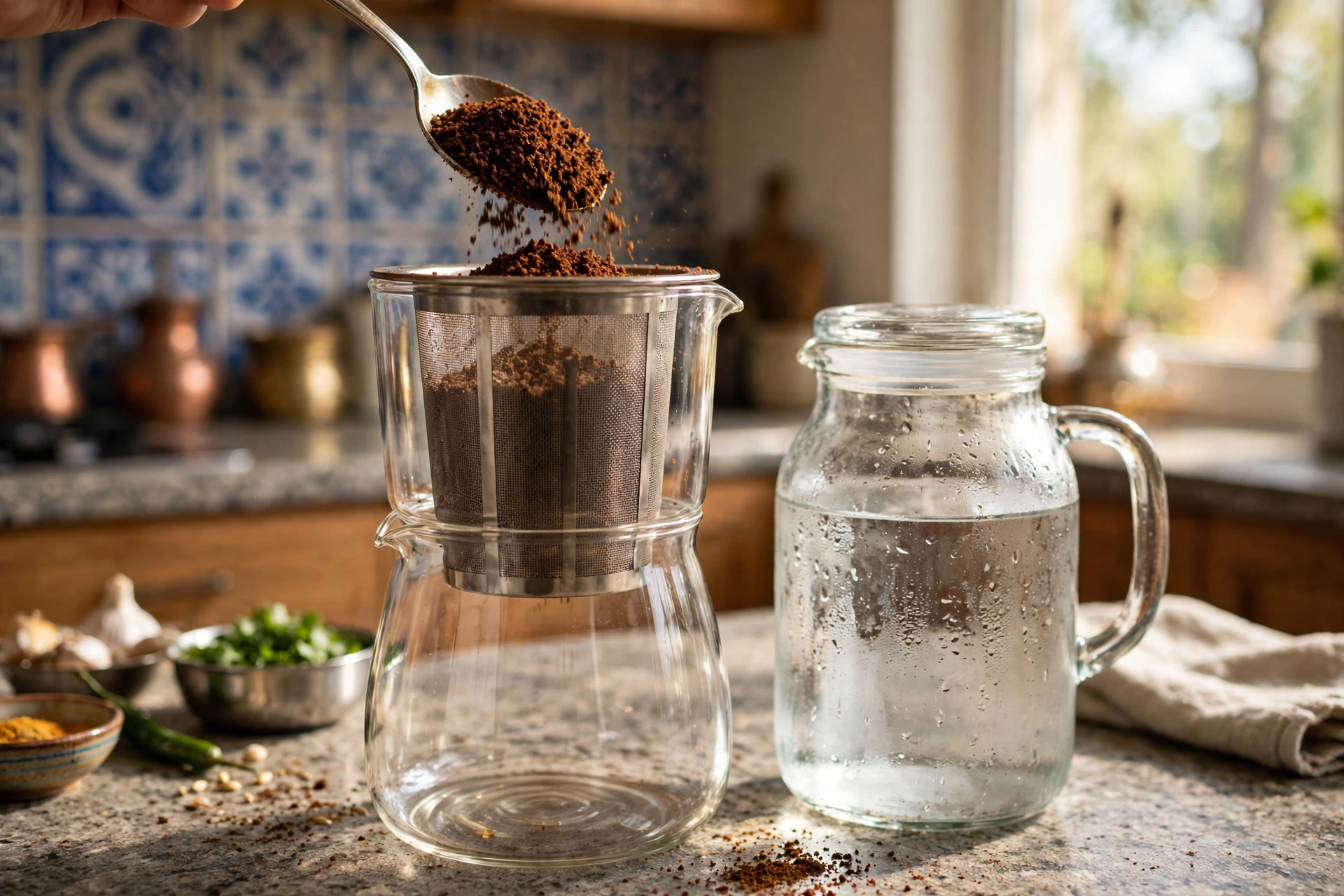
Step 1 — Grind coarse. Grind 100 g of coffee coarse, like rough sea salt or raw sugar. If you buy pre-ground, ask for a “French press” or “cold brew” grind. Standard drip grind is too fine and will make your batch muddy and bitter.
Step 2 — Combine. Add the grounds to the jar, then pour in 800 ml of cold or room-temperature filtered water for ready-to-drink strength (or 500 ml for concentrate). Pour slowly so you wet the grounds as you go.
Step 3 — Stir once. Stir gently until every ground is wet. Dry pockets do not extract at all, and the grounds will float back up — that is fine.
Step 4 — Cover and steep. Put the lid on and place the jar in the fridge for 12–18 hours. Twelve hours gives a brighter, lighter result; sixteen to eighteen gives a heavier, sweeter one. Past 24 hours it turns woody and bitter — longer is not better.
Step 5 — Strain twice. Pour through a fine-mesh sieve into a clean container to catch the bulk of the grounds, then through a muslin cloth or paper filter for the fine sediment. Be patient, and do not squeeze the grounds — that pushes bitter, cloudy bits into your brew.
Step 6 — Serve. Pour over ice. If you made concentrate, dilute one part concentrate with one part cold water or milk first. Store the rest in a sealed bottle in the fridge.
Method 2: The French Press Method (Easiest Cleanup)
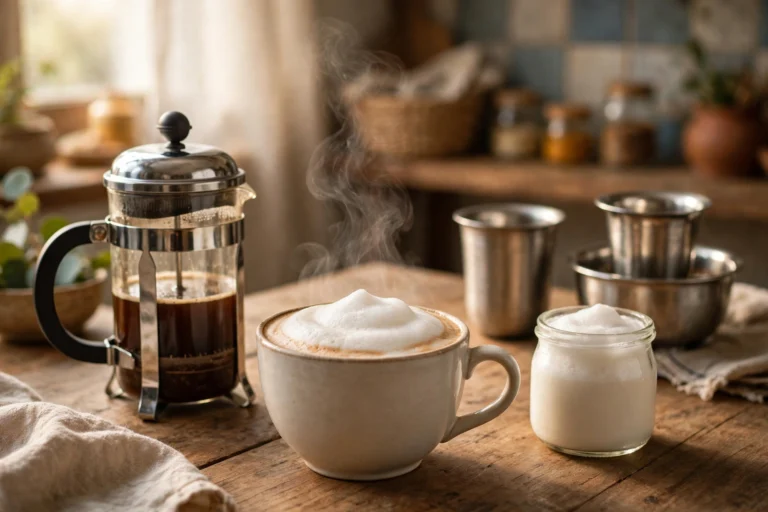
If you own a French press, you already own a cold brewer. Use the same ratios as the jar method: coffee and water in the press, stir once, lid on with the plunger pulled all the way up, and 12–18 hours in the fridge. Do not push the plunger down while it steeps — plunge slowly at the very end, then pour. The press’s mesh does the first strain for you; a second pass through a paper filter or muslin cloth gives a cleaner cup, but many people skip it. If you do not own a press yet, our Best French Press Coffee Maker in India guide covers the budget picks — and French Press vs Moka Pot compares it with the other classic budget brewer.
Method 3: The Dedicated Maker Method
A dedicated maker is a jar with a built-in filter basket: grounds go in the basket, water goes in the jug, and at the end you lift the basket out — no sieving, no cloth. Same ratios, same steep time, same result. The basket is the whole difference, and it is a convenience difference, not a quality one. Three makers are compared with real prices and honest flaws in the gear section below — and our full roundup, Best Cold Brew Coffee Maker in India, covers them in detail.
Steep Time and Temperature: The India Table
This is the part the international guides get wrong for Indian kitchens: they assume a 20°C kitchen. Most Indian kitchens run hotter, and temperature decides both the steep time and whether the brew is safe. Cold water extracts slowly; warm water extracts faster — and above about 30°C, a long countertop steep starts fermenting instead of brewing.
| Kitchen / season | Where to steep | How long | Why |
|---|---|---|---|
| Summer, above 30°C | Fridge only | 16–18 hours | Countertop steeping for 12+ hours at 30°C risks fermentation; the fridge is slower and more forgiving. |
| Monsoon / humid, 25–30°C | Fridge (recommended) | 16–18 hours | Countertop works at 12 hours, but the fridge gives better control and no bacterial risk. |
| Winter, below 25°C | Counter or fridge | 12–16 hours on the counter; 16–18 hours in the fridge | Room temperature extracts faster, so shorten the steep; the fridge stays the safer, cleaner-tasting option. |
The rule behind the table: if your kitchen is above 25°C — most Indian kitchens in summer — always use the fridge. Room temperature works in winter, but cut the time to 12 hours. Never leave a finished brew at room temperature for more than 2 hours after steeping; in Indian summers, bacteria grow quickly in coffee left on the counter.
Filtering and Storing Your Cold Brew
Filtering is where a good batch becomes a clean one. Strain twice: once through a fine-mesh sieve for the bulk, once through a muslin cloth or paper filter for the fines. A single pass through a sieve leaves sediment that keeps extracting in the bottle and turns the brew bitter over the week. If you use a dedicated maker, lift the basket out first — never pour with the filter still in, or fine grounds slip into the cup.
Storage: cold brew concentrate keeps 7–10 days in the fridge in a sealed, airtight container, and tastes freshest in the first few days. Once you dilute it with water or milk, drink it within 2–3 days. Store it away from strong-smelling food — an unsealed container picks up fridge odours — and never store mixed coffee (brew plus milk) in the fridge; mix each glass fresh. If the brew smells sour, vinegary, or fizzy, it has fermented: throw it out, do not taste-test it. That is almost always a countertop steep in a hot kitchen, or a steep that ran past 24 hours.
How to Serve Cold Brew
How you serve depends on what you brewed. Concentrate is a base, not a drink — dilute it. Ready-to-drink goes straight over ice.
| Serve | What to mix | Ratio |
|---|---|---|
| Classic black | Concentrate + cold water | 1 part concentrate : 1 part water, over ice |
| Iced latte | Concentrate + cold milk | 1 part concentrate : 1 part milk (or 2 parts milk for a milky drink) |
| Ready-to-drink | Nothing — pour as-is | Straight over ice, splash of milk if you like |
| Hot cold brew | Concentrate + hot water | 1 part concentrate : 1 part hot water |
| Sweetened | Jaggery syrup, honey, or condensed milk | To taste — never add sugar to the brew itself; sweeten in the glass |
Cold coffee does not dissolve sugar well, so make a quick simple syrup instead: equal parts sugar and hot water, stirred until clear, cooled, and kept in the fridge. Jaggery syrup works the same way and suits the flavour better than white sugar. For an Indian twist, Kolkata cold-brew makers infuse natural ingredients into the finished brew — two slices of orange, rosemary, or dried cranberries — and warn against mango, which spoils the batch. Add these at serving time, not during the steep.
What a Glass of Cold Brew Costs at Home
Cold brew looks expensive because it uses two to three times more coffee per cup than hot brew — but the maths still lands far below café prices. The worked example below uses today’s verified prices (16 November 2026): Blue Tokai Cold Brew Blend Bold at ₹700 for 250 g.
| Per glass (250 ml, ready-to-drink) | Quantity | Cost |
|---|---|---|
| Coffee (Blue Tokai, ₹700/250 g = ₹2.80/g) | 20 g | ~₹56.00 |
| Milk (if making an iced latte, ~125 ml) | 125 ml | ~₹8.00 |
| Ice + water | — | ~₹0.00 |
| Total per glass (black) | ~₹56 | |
| Total per glass (with milk) | ~₹64 | |
| One month, one glass a day (black) | 30 glasses | ~₹1,680 |
| Same habit at a café (₹395 a Tall) | 30 glasses | ~₹11,850 |
The coffee is the whole cost: a 250 g pack at ₹700 makes about 12–13 glasses at 20 g per glass, so one pack covers nearly two weeks of daily cold brew. The café figure (₹395 for a Starbucks Tall) comes from InstaCuppa’s October 2026 price check, not our own — but even halving it, the home glass is roughly 3× cheaper. The gear is a one-time cost on top: a jar costs nothing if you own one, a dedicated maker costs ₹1,299–₹1,839 once and lasts years. Sleepy Owl’s Cold Brew Packs (₹699 for 5 packs, verified today on sleepyowl.co) work out to ₹140 per pack and skip the grinding and straining entirely — worth it if you brew occasionally and value the convenience over the per-glass price.
SAVINGS — One 250 g pack of beans (₹700) plus a jar you already own makes about 12 glasses for ~₹56 each. A month of daily home cold brew costs about ₹1,680 in coffee — a single week of café cold brew costs more.
Gear If You Want It: 3 Cold Brew Makers Worth Buying
You do not need any of these — the jar method above makes the same coffee. Buy a maker only if you brew three or more times a week and want to skip the sieving. All three have their own Product File on this site with full specs, and all three prices below were verified today, 16 November 2026, on Flipkart and brand stores.
AGARO Regal Iced Brew Coffee Maker 1.3L
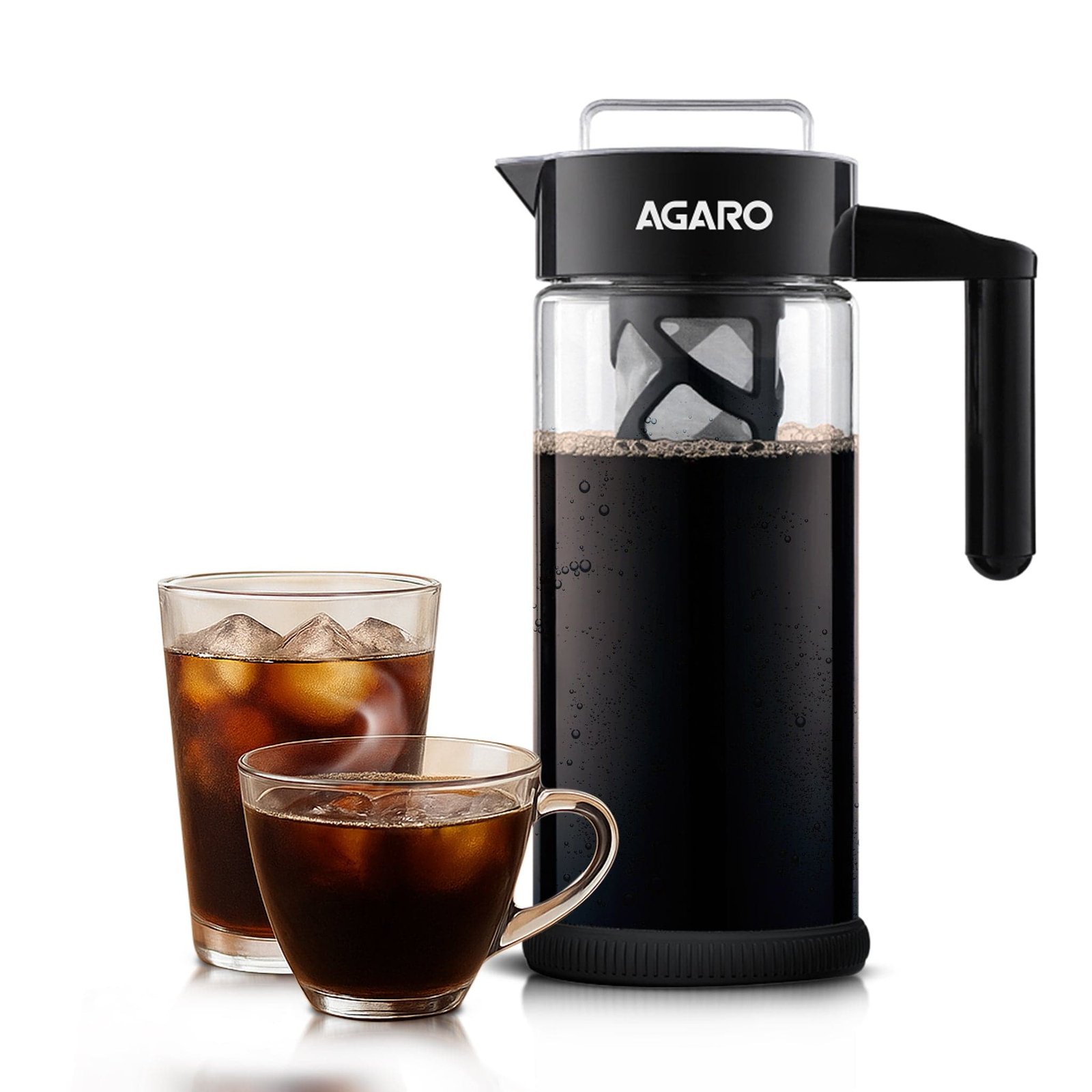
Price: ₹1,599 — and the cheapest way to buy it today is Flipkart at ₹1,299 (MRP ₹2,499, 48% off, checked 16 November 2026; in stock, delivery by 19 November). The AGARO store lists it at ₹1,599. ₹339 above its lowest tracked price of ₹1,260 (15 Oct 2026) (+27%)Same price as when this guide was published (₹1,599, 16 Nov 2026).
Key details: 1.3 L borosilicate glass pitcher, about 5 glasses per batch; reusable steel mesh filter with a removable bottom cap; dishwasher safe; 1-year warranty.
Why it wins: the best-value dedicated maker we track — glass, not plastic, at the lowest price of the three, and the only one with a live price that updates hourly through our tracker.
WATCH OUT FOR: an Amazon.in owner review reports “coffee seeps from the filter” — fines can escape the mesh, so a second strain through a cloth still helps. The lid is not described as airtight, so keep it away from strong-smelling food in the fridge. At 1.3 L it suits one or two people, not a family batch.
Best for: most homes — a single drinker or a couple who wants strong, black cold brew in glass.
InstaCuppa Cold Brew Coffee Maker 2.2L

Price: ₹1,499 on the InstaCuppa store (checked 16 November 2026; in stock, free delivery, cash on delivery, delivery by 23 November). Flipkart lists it at ₹1,498 the same day (MRP ₹1,699, 12% off; 5★ from 5 ratings — a thin pool). The brand store displays 4.4★ from 56 Amazon reviews on its own page — that is the brand’s display, not a live Amazon read.
Key details: 2.2 L jug, about 1.5 L of brew per batch (8–10 glasses); BPA-free PP jug, not glass; fine nylon mesh infuser, 40-micron, running nearly the full height of the jug; airtight screw-on lid with measurement markings; 1-year warranty with free replacement and a 10-day free trial.
Why it wins: the biggest batch of the three — the only maker here that covers a family or a full week of daily glasses in one steep.
WATCH OUT FOR: the filter basket is too small for the jug. Amazon’s own listing summary says it is “not suitable for strong coffee lovers”, and a 1★ owner review reports the basket “holds only ~70 g of coffee, but you need nearly 2 L of water just to submerge it” — a watery ratio of about 1:28 that makes weak cold brew. If you drink it strong, this is the wrong maker despite the size. It is also plastic, not glass.
Best for: families who drink it light over ice and want a week’s worth in one batch — not for strong-brew drinkers.
Hario Mizudashi Cold Brew Coffee Pot 1000ml

Price: ₹1,839 at Something’s Brewing (checked 16 November 2026; MRP ₹2,500, save 26%). Black is in stock — only 2 left — while Brown and Red are sold out. Free delivery, 7-day return, delivery in 5–7 working days. Rated 4.6★ from 5 reviews on the store — a thin pool, so read it as a hint, not a verdict.
Key details: 1000 ml heat-resistant glass pot, 4–5 servings per batch; built-in mesh filter; dishwasher safe; 600 g.
Why it wins: the premium glass pick — the best-looking pot here, from a Japanese brand founded in Tokyo in 1921, and the most forgiving brew for a first-timer who wants it ready-to-drink.
WATCH OUT FOR: the filter basket only reaches halfway down the pot, so it holds at most about 100 g of coffee — concentrate is impossible, and you cannot brew half a batch because the water would not reach the coffee. The glass is fragile: owners report it cracking or chipping when knocked over. And the pour spout is unsealed, so it absorbs fridge odours — store it upright, away from strong-smelling food.
Best for: a single drinker who loves glass, drinks it black over ice, and never wants concentrate.
Troubleshooting: When Your Cold Brew Goes Wrong
Almost every bad batch comes from one of six causes, and each has a direct fix.
| Problem | Likely cause | Fix |
|---|---|---|
| Weak, watery brew | Too little coffee, grind too coarse, or a basket too small for the jug | Use the 1:8 ratio (100 g : 800 ml) as a minimum; grind to sea-salt size, not peppercorn; check the basket holds the full dose |
| Bitter cup | Grind too fine, or steeped past 24 hours | Grind coarser; keep the steep to 12–18 hours; never use espresso or drip grind |
| Cloudy brew, grounds in the glass | Strained once, or the grounds were squeezed | Strain twice (sieve, then cloth or paper); never squeeze the grounds |
| Sour or fizzy taste | Steeped on the counter in a hot kitchen, or fermented | Throw it out; next batch goes in the fridge, never the counter above 25°C |
| Woody, dusty flavour | Steeped too long (past 24 hours) | Cut the steep to 16–18 hours; set a timer — longer is not better |
| Tastes flat, no sweetness | Light roast, or under-extracted (too short a steep) | Use a medium or dark roast; steep the full 16–18 hours in the fridge |
If the cup is weak and bitter at the same time, the usual culprit is a fine grind with too little coffee: the water rushes through the fine bed, over-extracting the dust and under-extracting the rest. Fix the grind first — cold brew grounds should look like rough sea salt, never like powder.
Who Should NOT Make Cold Brew
Cold brew is not for everyone. Skip it if you drink your coffee hot and black and love bright, acidic flavours — cold brew mutes exactly what you enjoy. Skip it if you need coffee in ten minutes: this method trades time for smoothness, and there is no shortcut — not hot water, not a finer grind, not a longer steep. Skip the dedicated maker if you brew less than twice a week: a jar and a muslin cloth make the same coffee, and a ₹1,300–₹1,800 maker sitting unused in a cupboard is the worst coffee purchase in this guide. And if you only ever drink instant coffee, do not start here — instant is already brewed, and this method needs real ground beans. For everyone else — iced-coffee lovers, milk-coffee drinkers, and anyone whose summer kitchen runs too hot for a morning brew — it is the easiest good coffee you will ever make.
Frequently Asked Questions
How long does cold brew coffee take to make at home?
About 5 minutes of hands-on work and 12–18 hours of waiting. Steep 12–16 hours for a brighter, lighter brew and 16–18 hours for a heavier, sweeter one, always in the fridge when your kitchen is above 25°C. Past 24 hours it turns woody and bitter.
What is the best ratio for cold brew coffee at home?
Start at 1:8 by weight for a ready-to-drink brew — 100 g of coarse coffee to 800 ml of water, poured straight over ice. For a concentrate you dilute later, use 1:5 (100 g to 500 ml), then cut it about one part concentrate to one part water or milk. For a single light glass, use 1:12 (20 g to 240 ml).
Can I make cold brew coffee with instant coffee?
No. Instant coffee is already brewed and dried — it dissolves immediately in cold water, so what you get is iced instant coffee, not cold brew. Cold brew needs whole or ground coffee beans that have not been pre-extracted.
Do I need a cold brew maker to make cold brew at home?
No. A large mason jar or pitcher, a spoon, and a way to filter (a sieve plus a muslin cloth) are enough. A French press also works — steep in the press and plunge at the end. A dedicated maker only saves you the straining step; it does not make better coffee.
How long does cold brew last in the fridge?
Concentrate keeps 7–10 days in a sealed, airtight container in the fridge, and tastes freshest in the first few days. Once diluted with water or milk, drink it within 2–3 days. Never leave a finished brew at room temperature for more than 2 hours.
Can I use South Indian filter coffee powder for cold brew?
Not well. Filter coffee powder is ground fine, like sand, for the steel filter — in cold brew it over-extracts, turns bitter, and slips through sieves. Use a coarse grind, like sea salt, from fresh beans. Save the filter powder for kaapi, where it belongs.
Prices checked on 16 November 2026 on Flipkart (AGARO Regal ₹1,299) and brand stores (InstaCuppa ₹1,499, Something’s Brewing ₹1,839, Blue Tokai ₹700, Sleepy Owl ₹699). Prices change frequently — the price at checkout is what counts. Looking for today’s best offers across all our picks? See Today’s Deals on Kaapi Craft.